

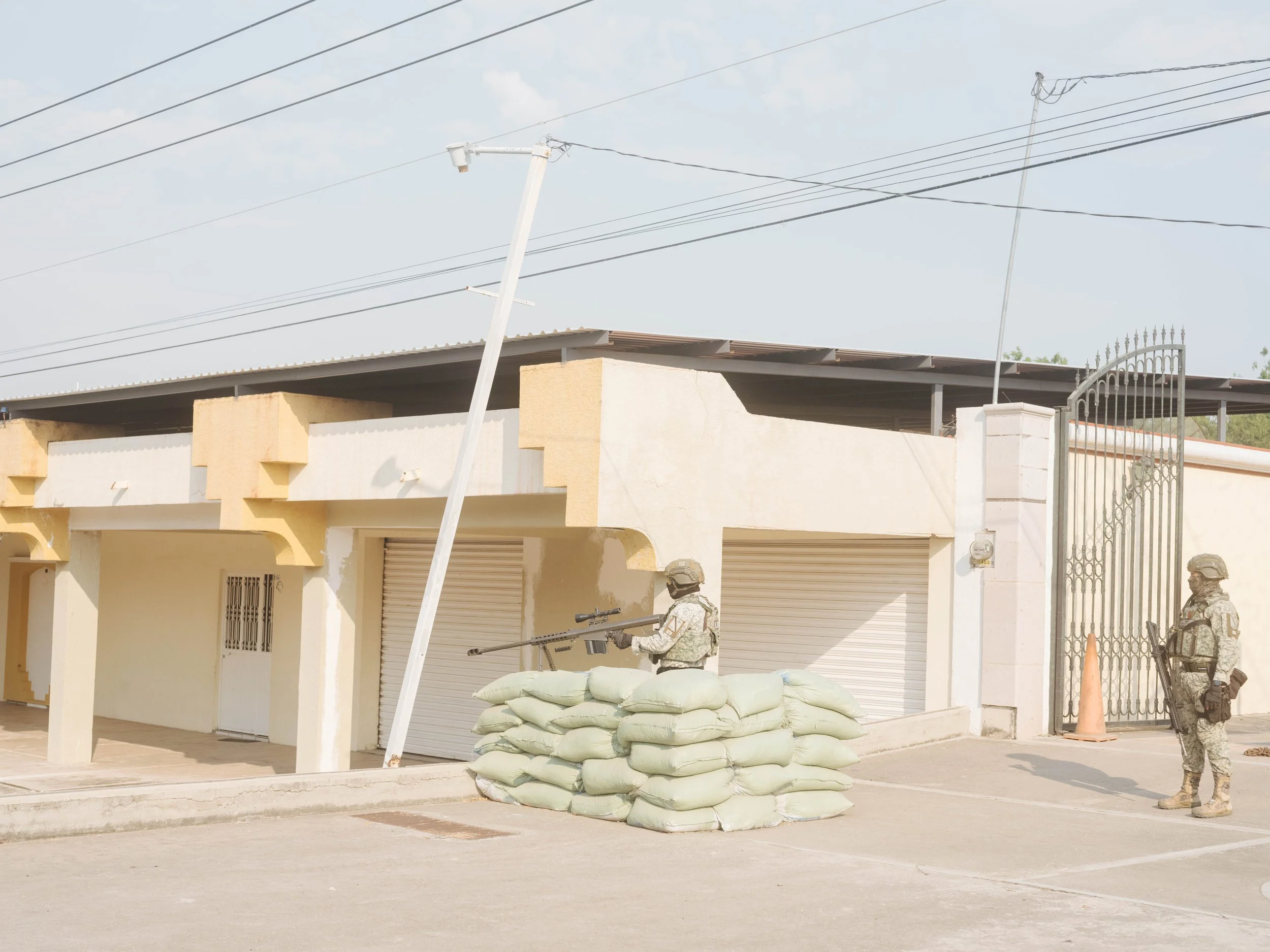
Soldiers stand guard outside a house in Tierra Caliente, Michoacán, Mexico. Military presence has become part of daily life in a region shaped by years of cartel control and violence.
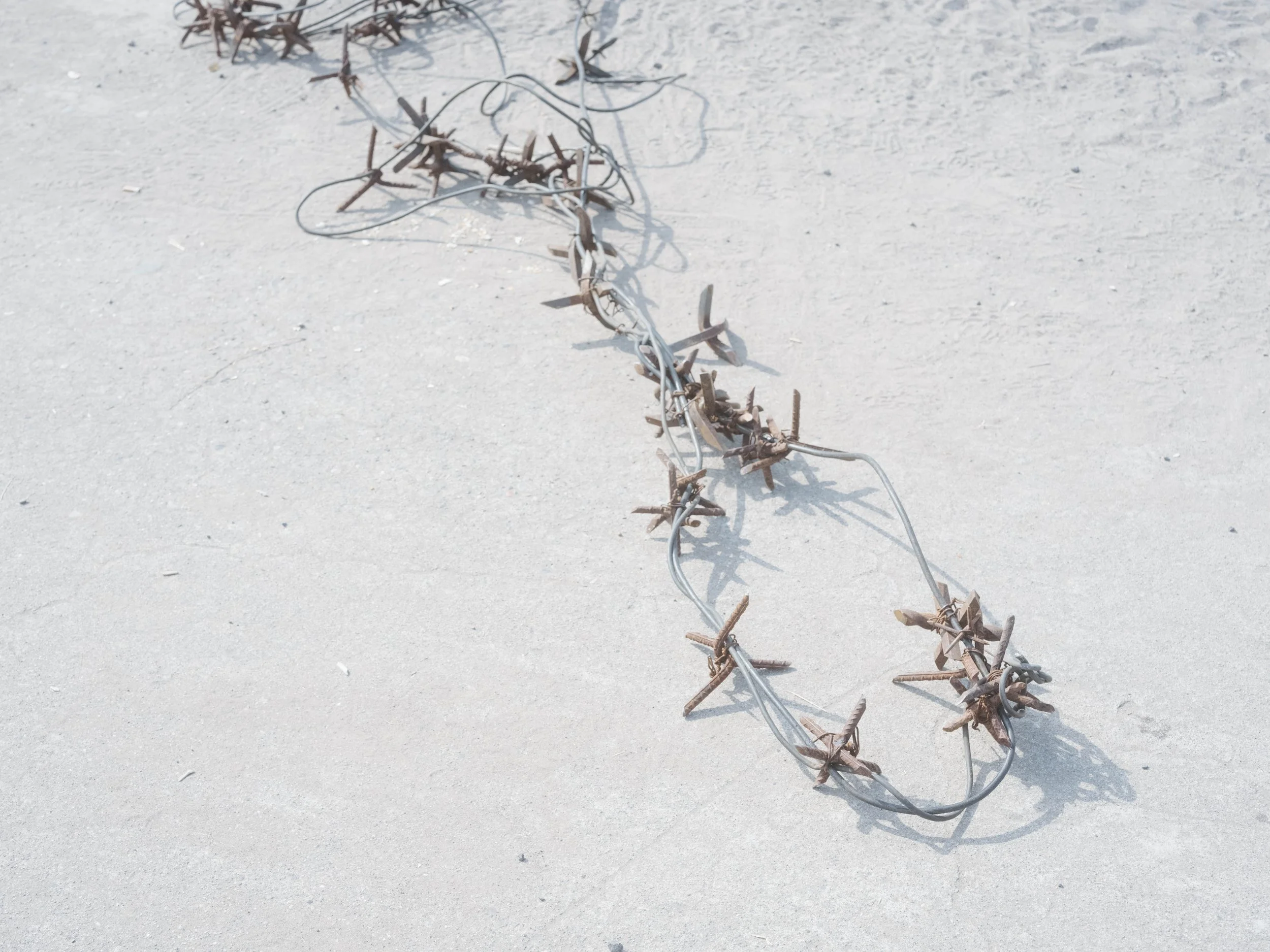
A tire-puncturing device lies abandoned on the ground in Tierra Caliente, Michoacán, Mexico. Such objects have been used to block roads and restrict movement during periods of violence.
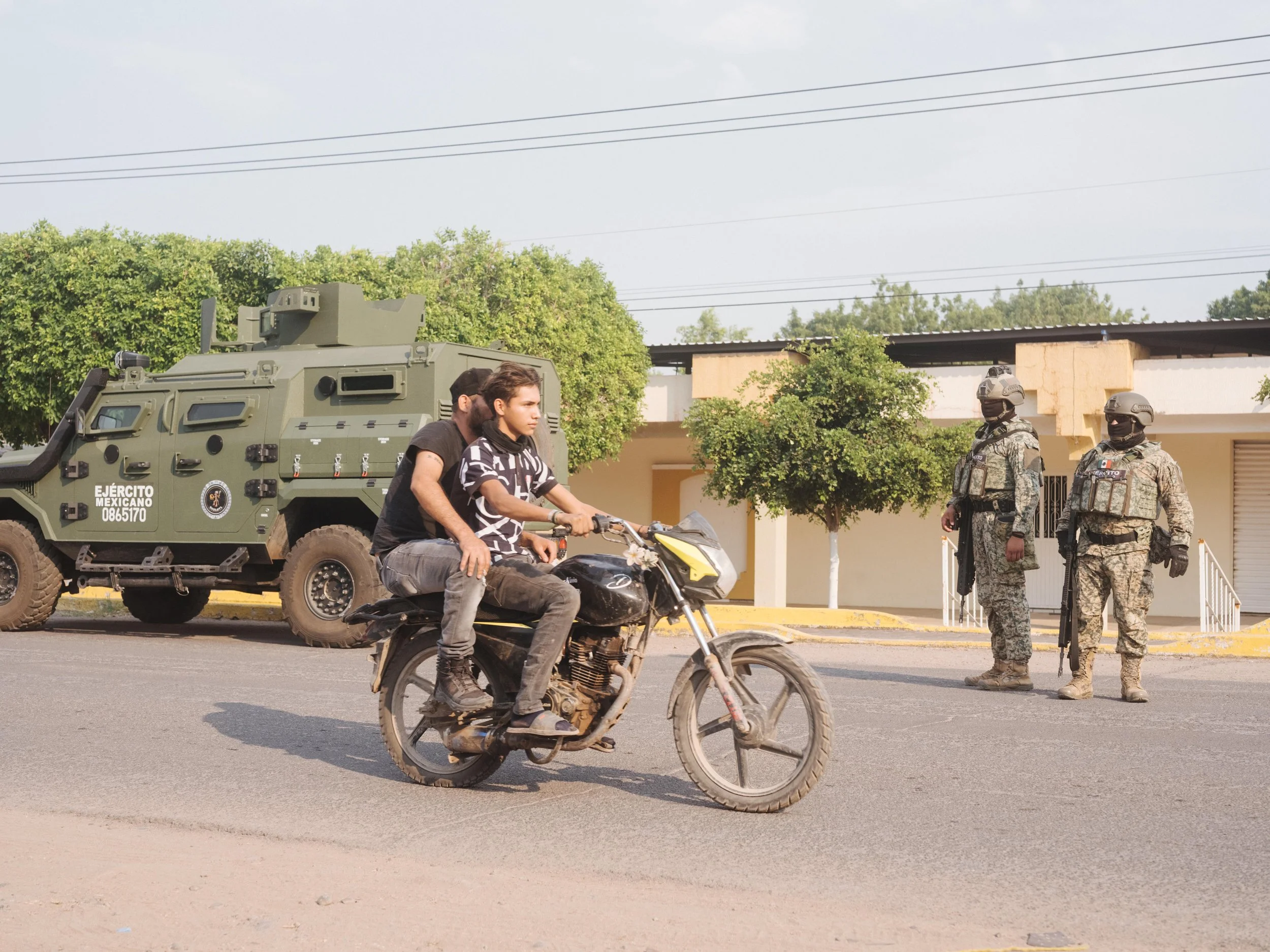
Two men ride a motorcycle past Mexican Army soldiers in Tierra Caliente, Michoacán, Mexico. Military presence remains in the region following years of cartel-related violence.
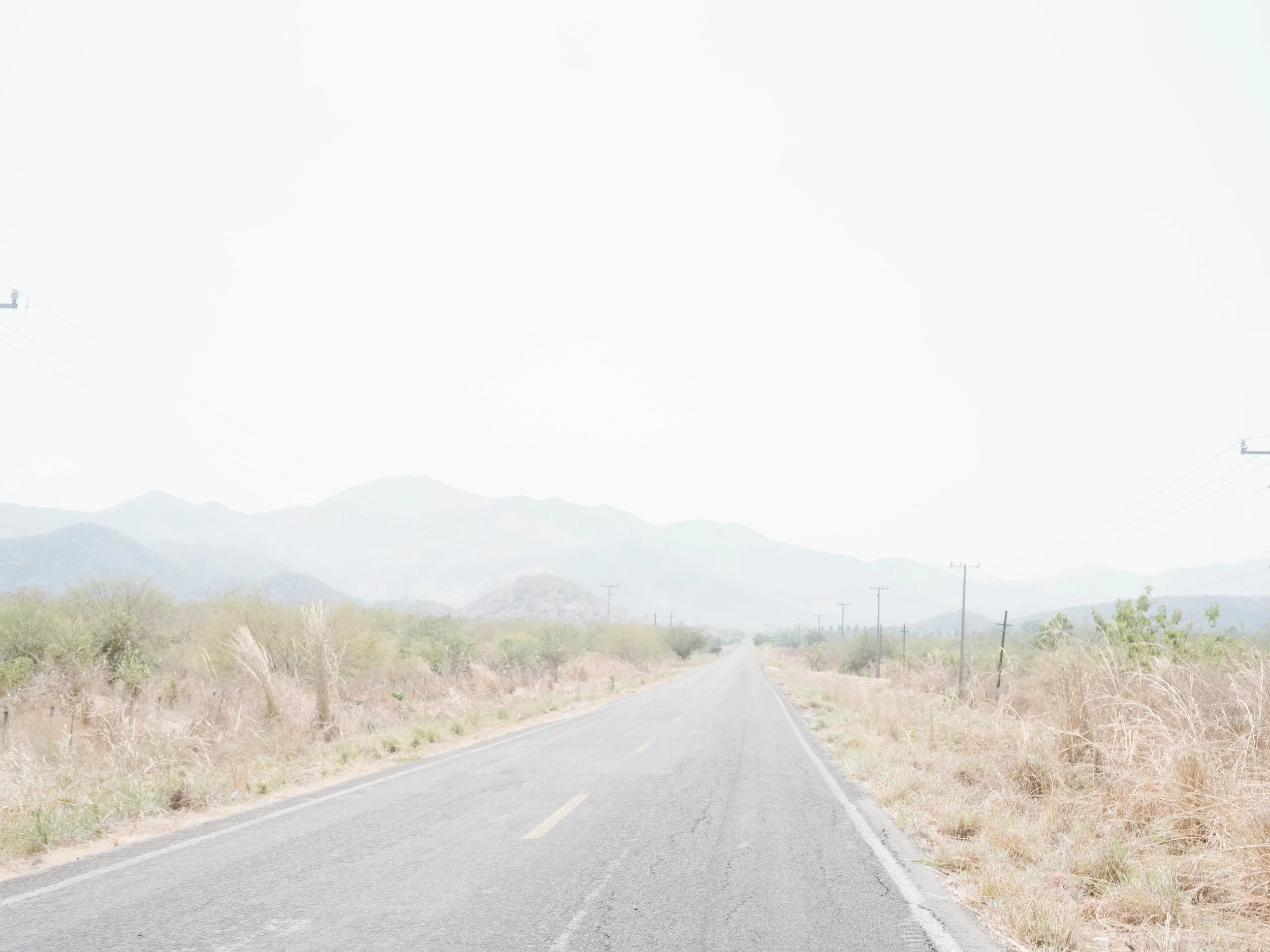
A road stretches through Tierra Caliente, Michoacán, Mexico. Some routes remain sparsely traveled following years of violence in the region.
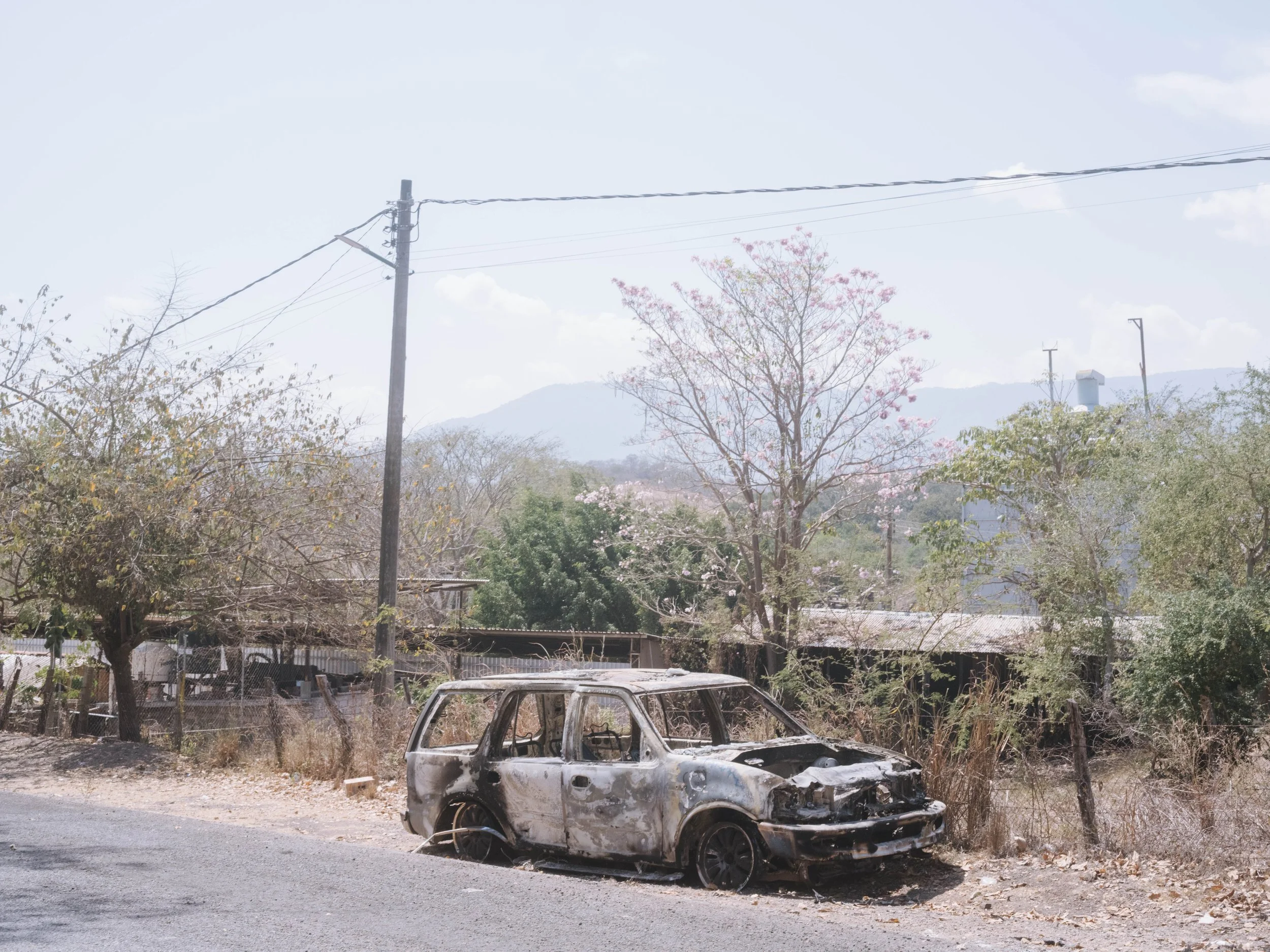
A burned vehicle sits along a roadside in Tierra Caliente, Michoacán, Mexico. Remnants of past violence remain visible across the region.
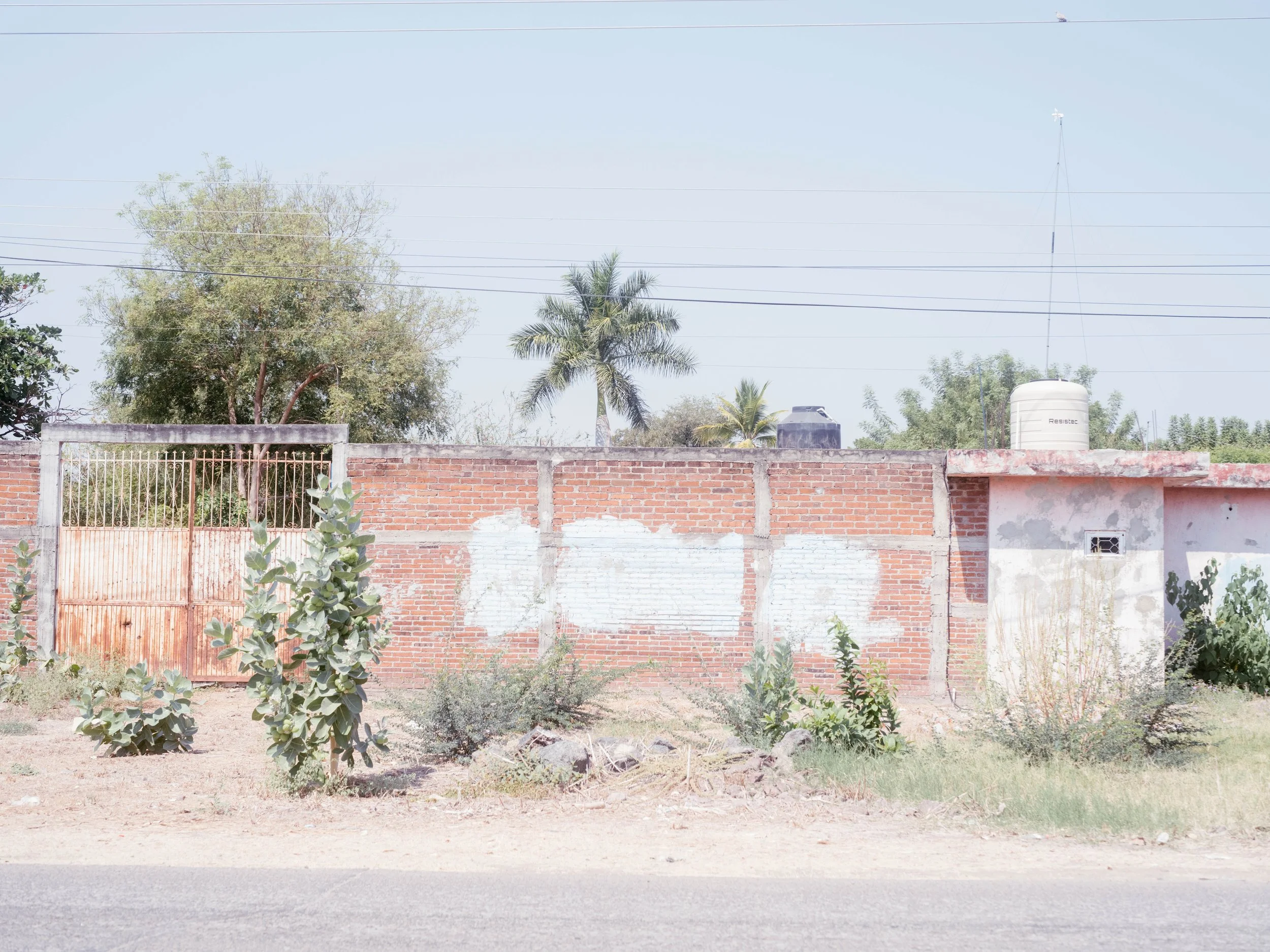
Graffiti bearing the initials “CJNG” on a wall in Tierra Caliente, Michoacán, has been partially covered with paint. Traces of cartel presence remain visible.
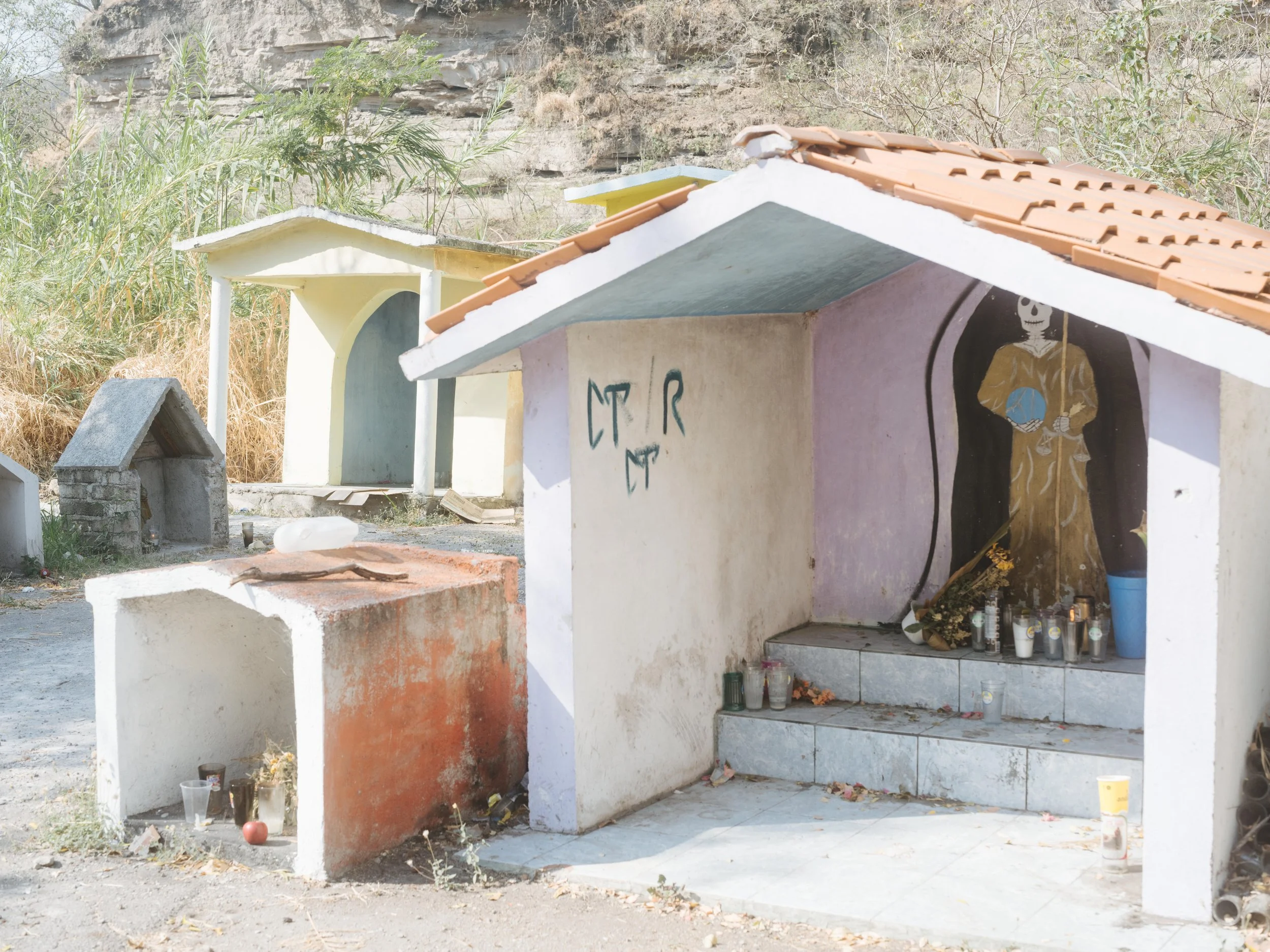
The initials “CT,” associated with the Knights Templar cartel, are painted on a roadside shrine in Tierra Caliente, Michoacán, Mexico.
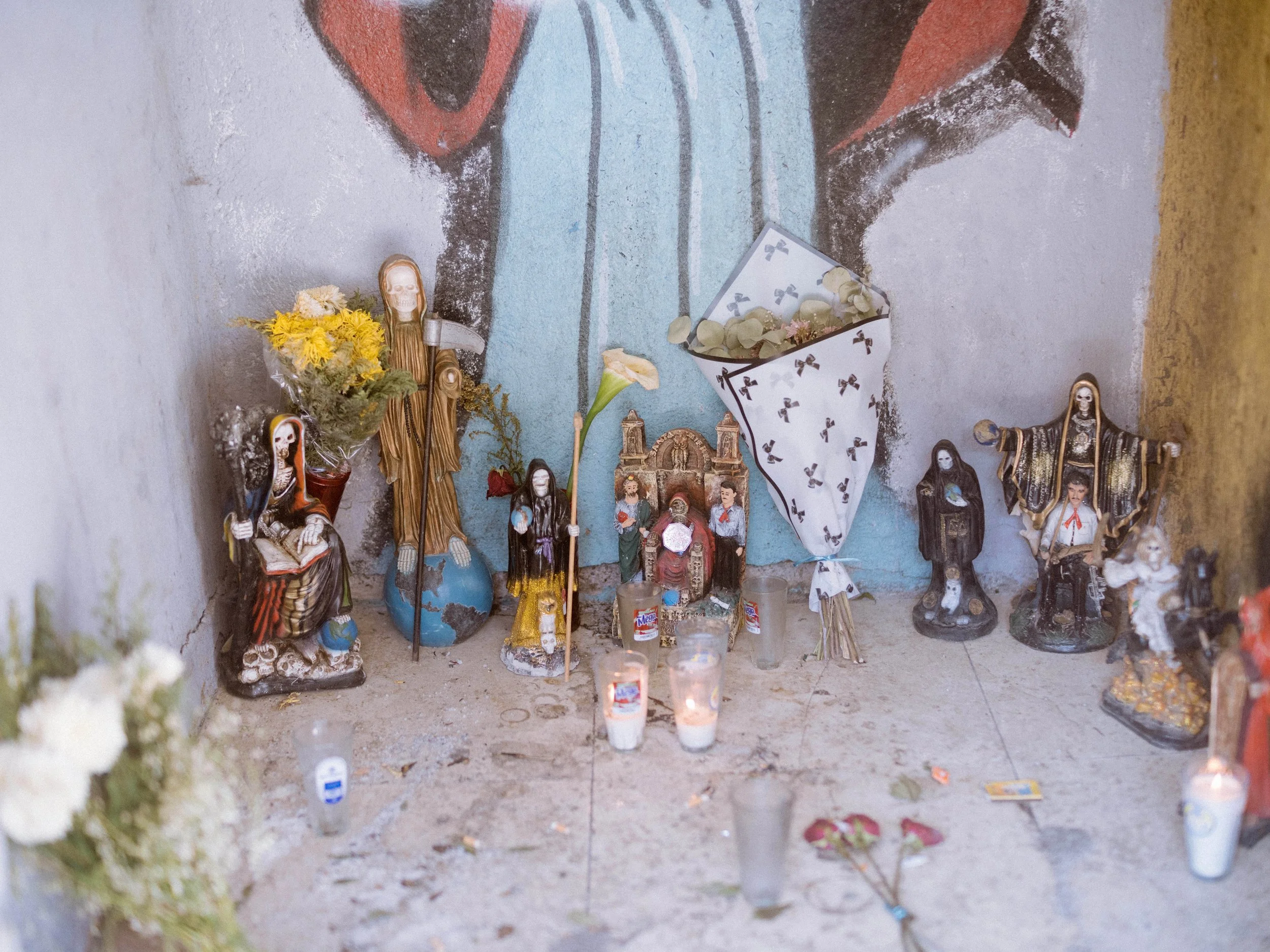
Figurines of Santa Muerte and other religious icons are placed inside a roadside shrine in Tierra Caliente, Michoacán, Mexico.
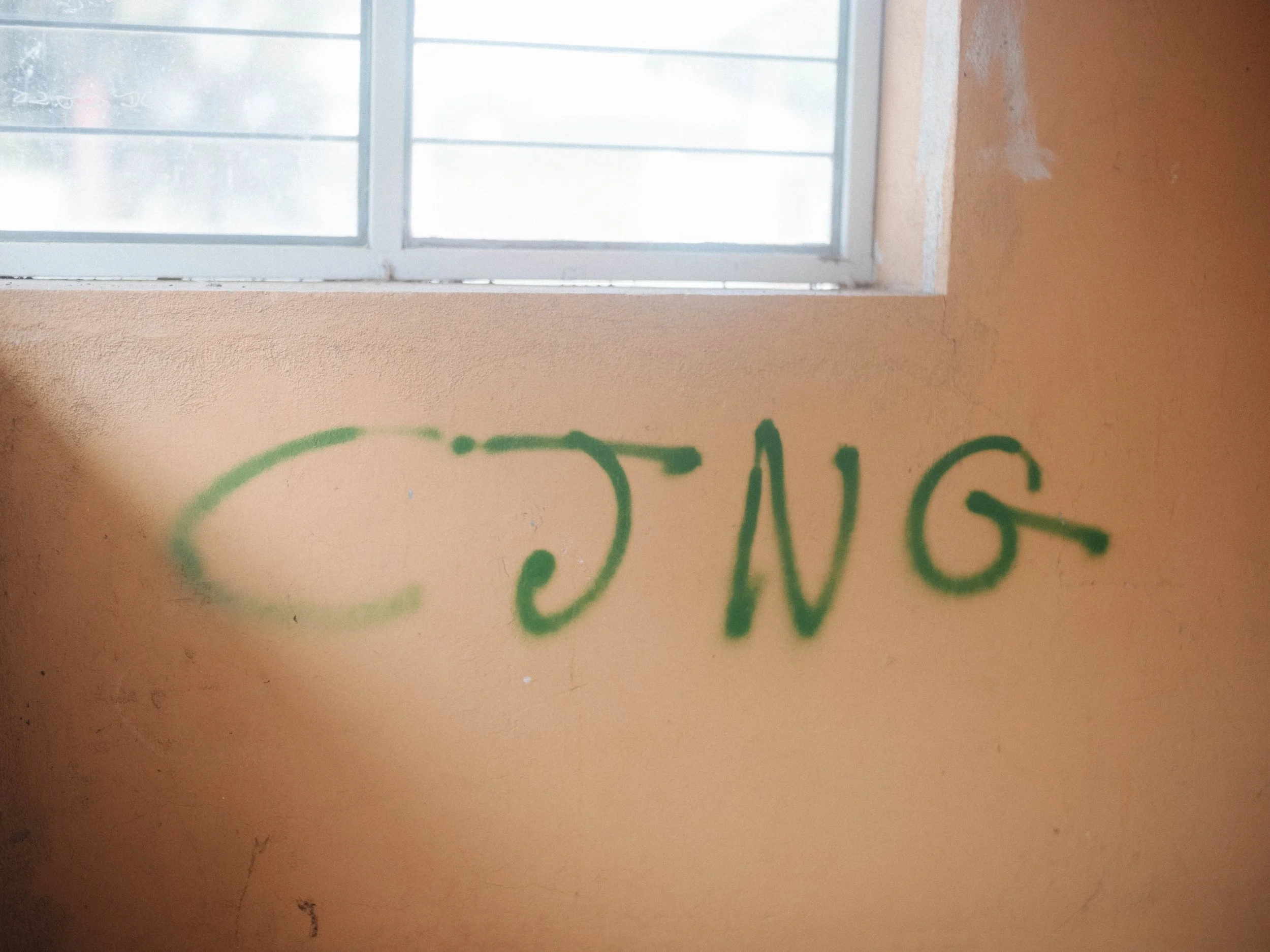
The initials “CJNG” are spray-painted on a wall in Aguililla, Michoacán, following the death of cartel leader Nemesio Oseguera Cervantes.
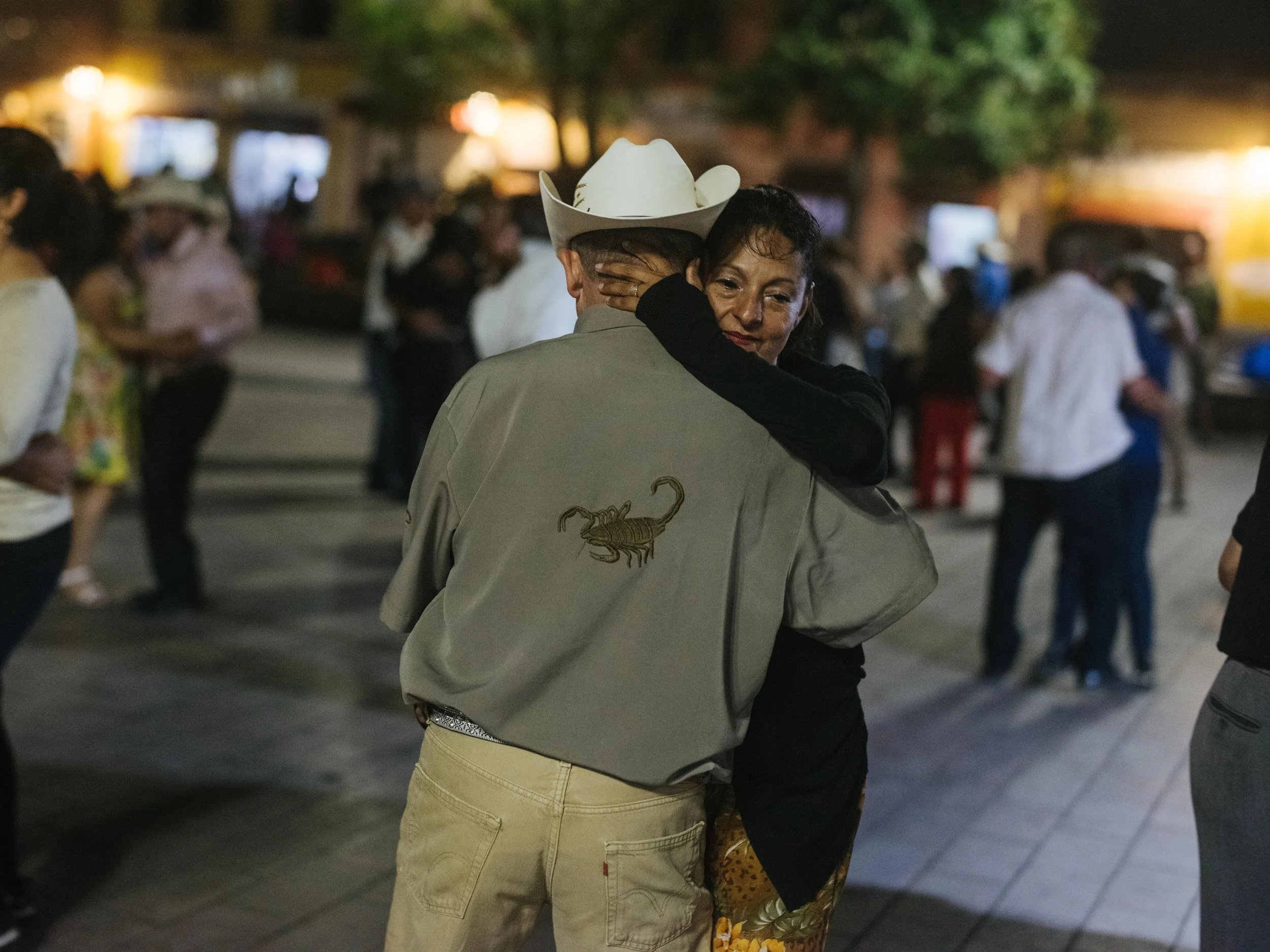
A couple dances in a public square in Michoacán, Mexico. Daily life continues amid a region shaped by years of violence.
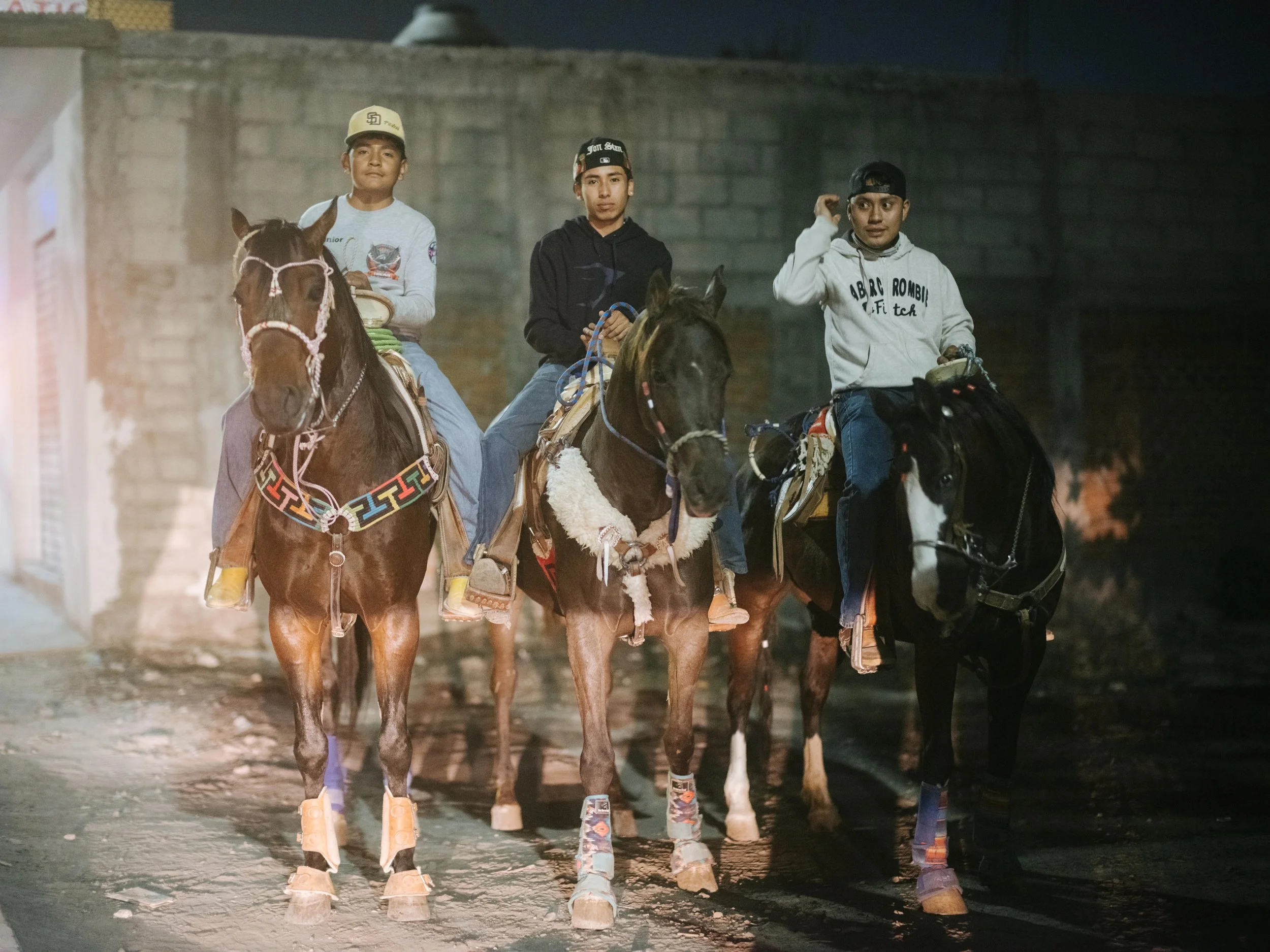
Adolescents near Tierra Caliente, Michoacán, come of age in a region shaped by years of violence and shifting territorial control.
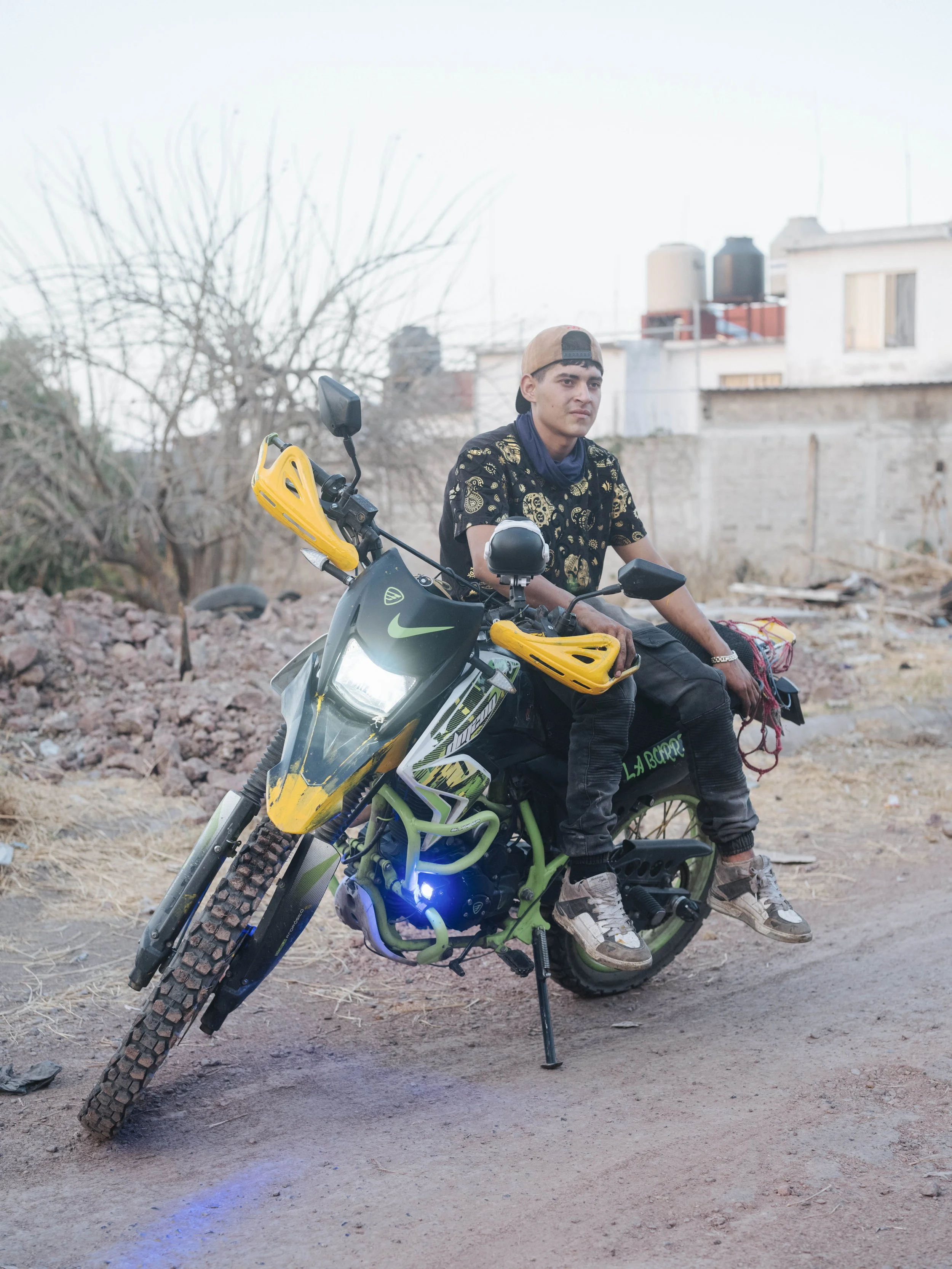
Adolescents near Tierra Caliente, Michoacán, come of age in a region shaped by years of violence and shifting territorial control.
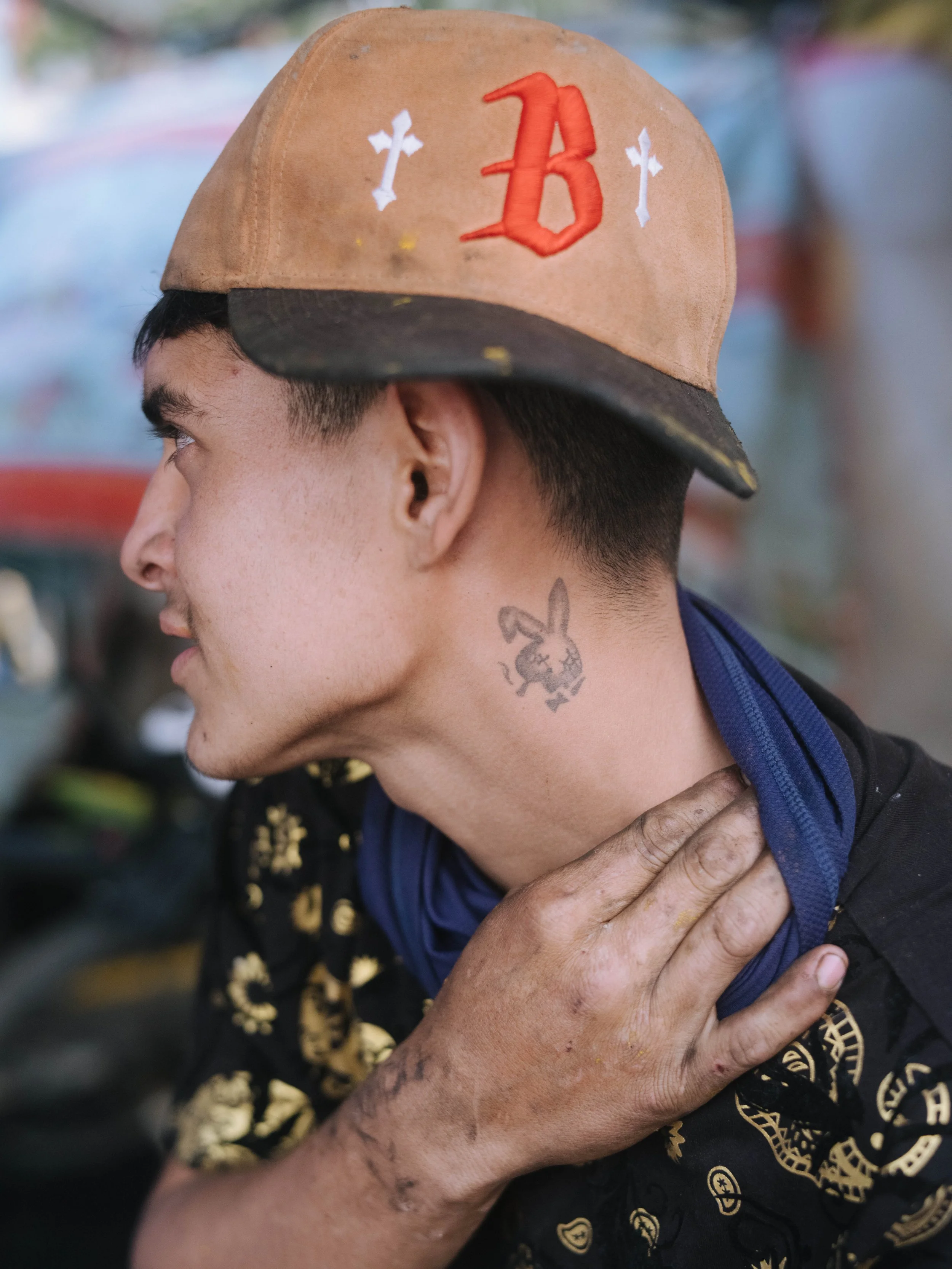
A young man shows a stylized rabbit tattoo on his neck near Tierra Caliente, Michoacán.
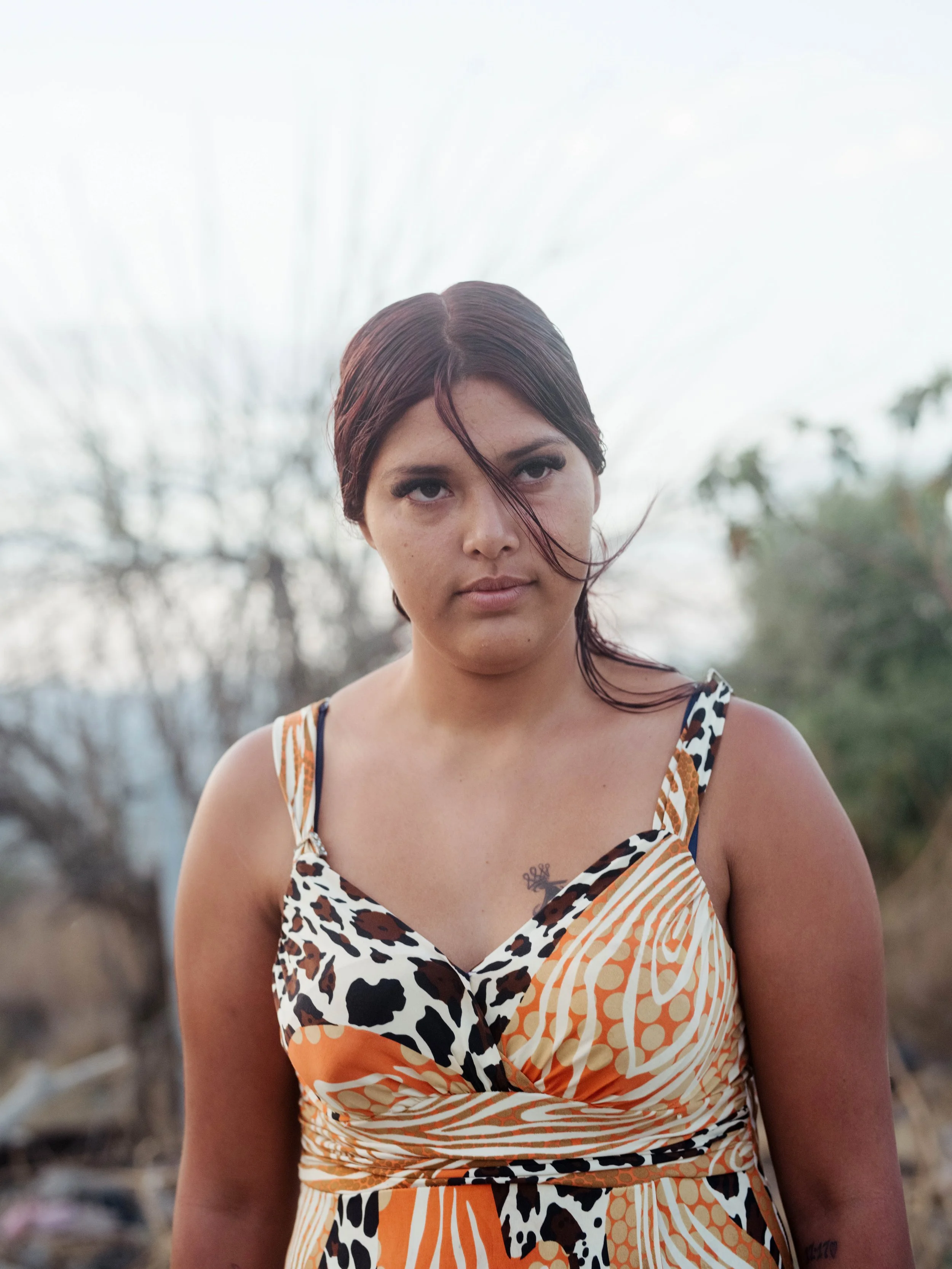
Adolescents near Tierra Caliente, Michoacán, come of age in a region shaped by years of violence and shifting territorial control.
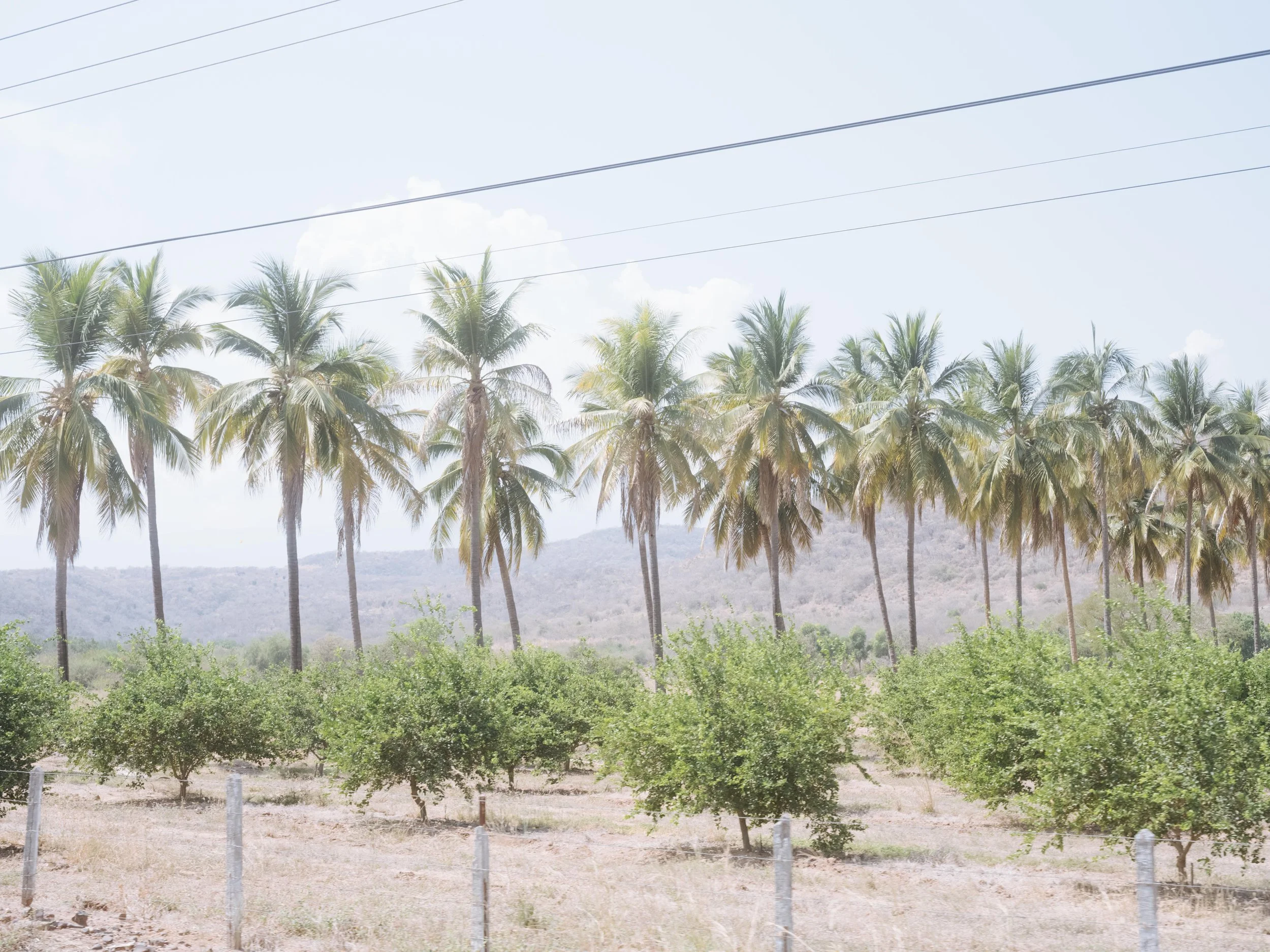
Lime groves extend across the landscape near Tierra Caliente, Michoacán, where citrus production is a key part of the local economy and has been affected by organized crime.
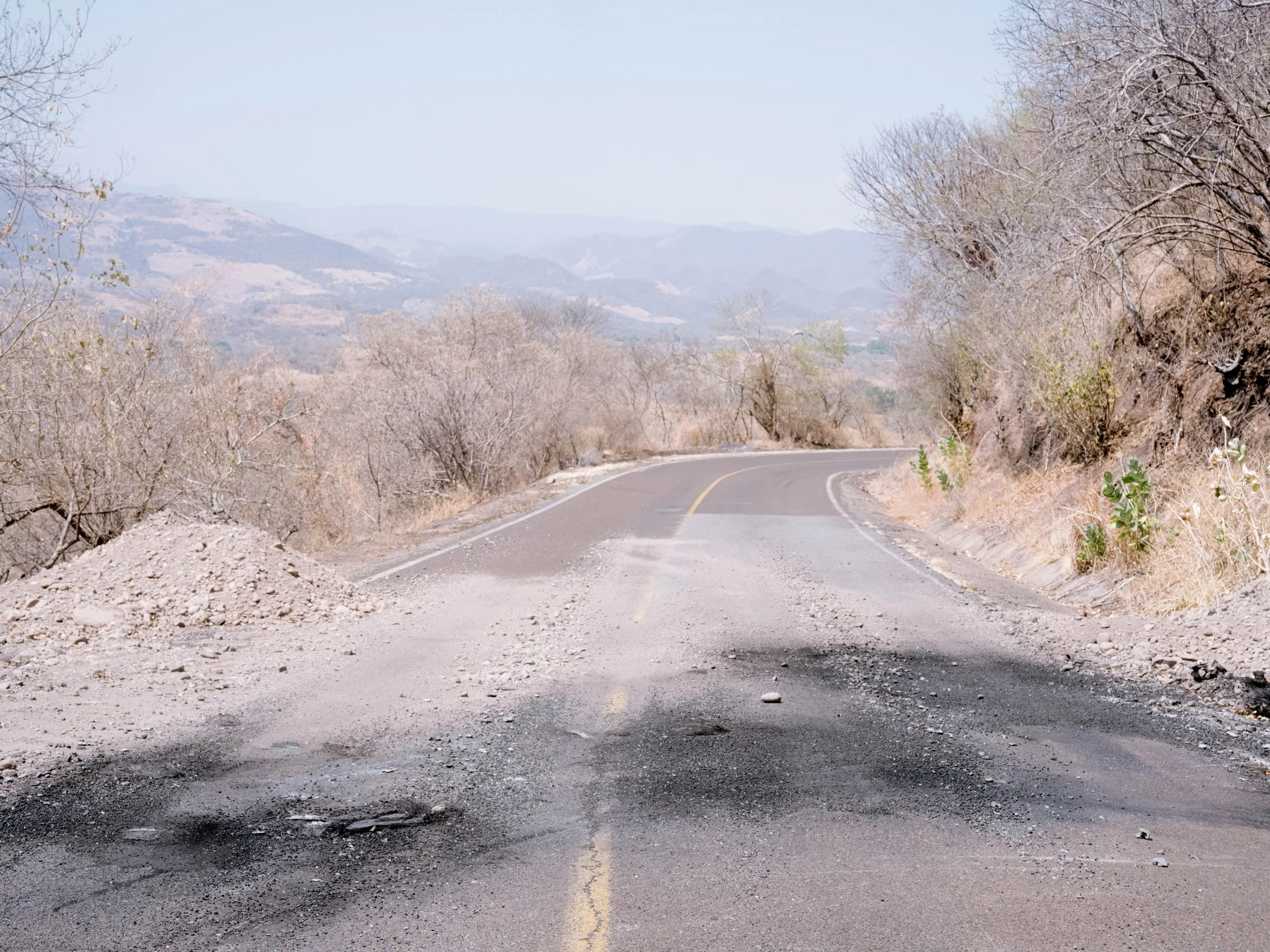
A road connecting El Aguaje and Aguililla, Michoacán, shows burn marks left by a vehicle during roadblocks following the reported capture of cartel leader Nemesio Oseguera Cervantes.
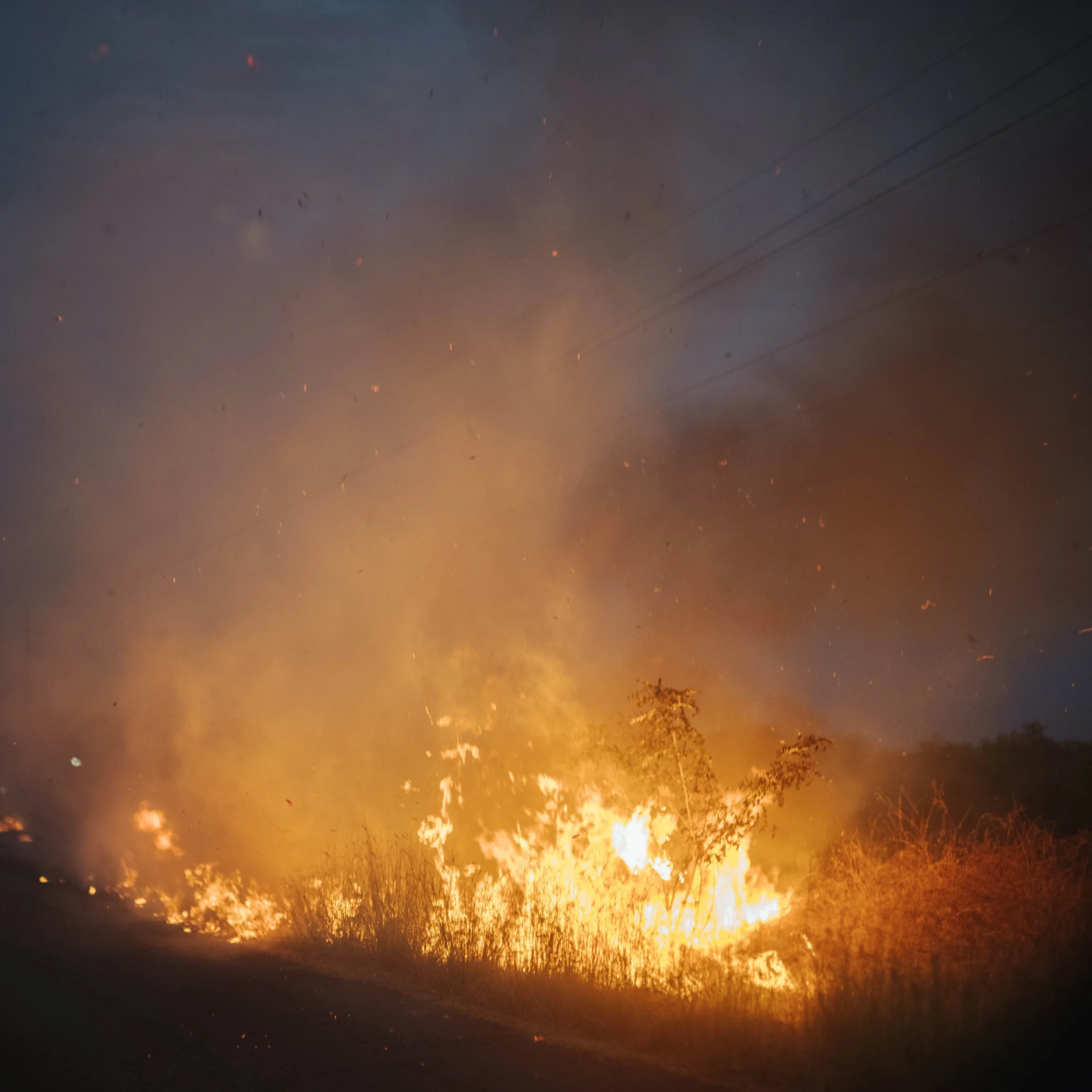
Dry vegetation burns along the road leading to Aguililla, Michoacán.
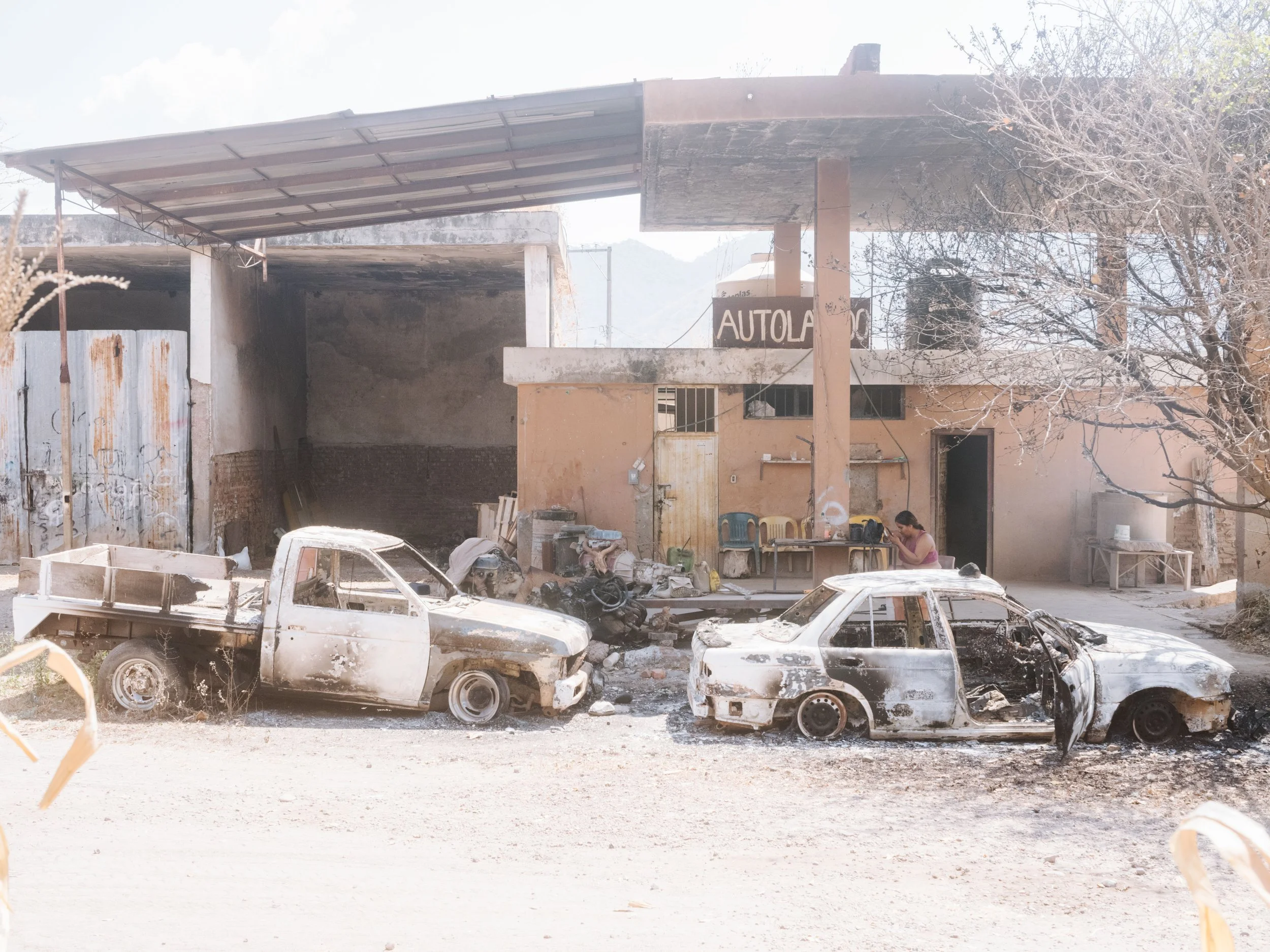
Burned vehicles remain outside a mechanic shop in Aguililla, Michoacán, Mexico, after roadblocks carried out by a cartel during security operations targeting its leader, Nemesio Oseguera Cervantes.
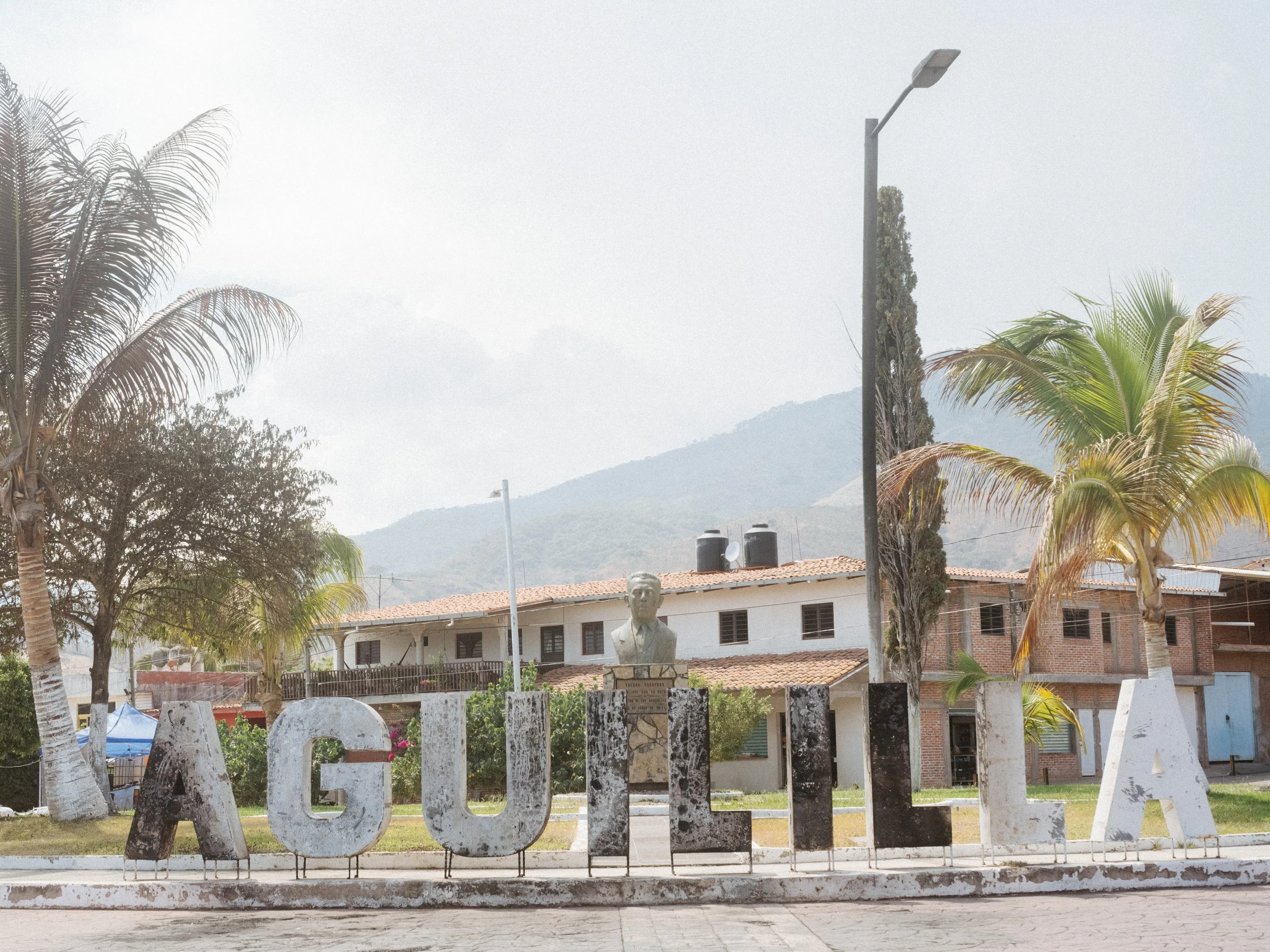
The town sign of Aguililla, Michoacán, birthplace of cartel leader Nemesio Oseguera Cervantes, shows burn marks following violence in the area.
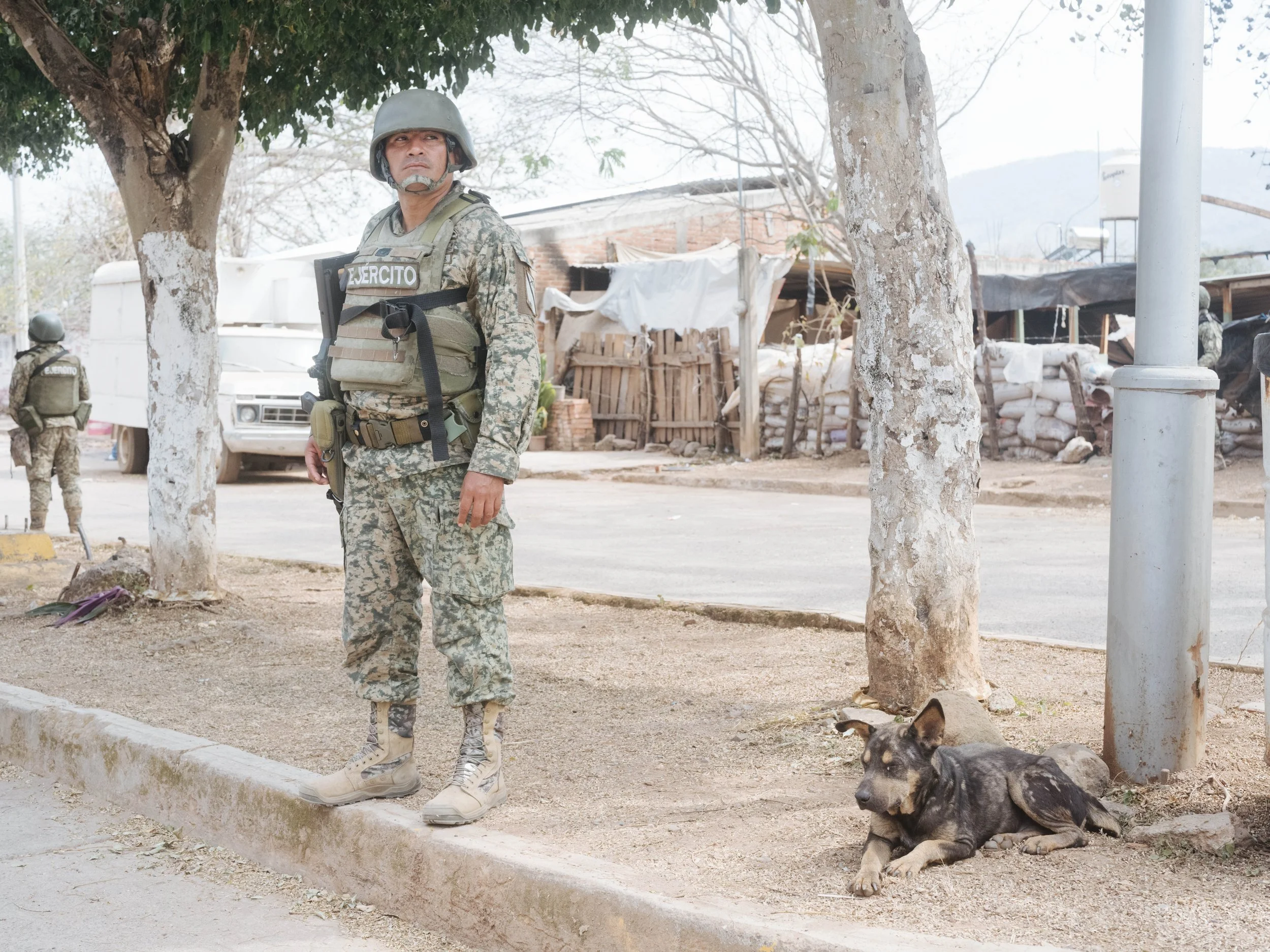
A Mexican Army soldier stands guard in Aguililla, Michoacán, where military presence remains in the region.
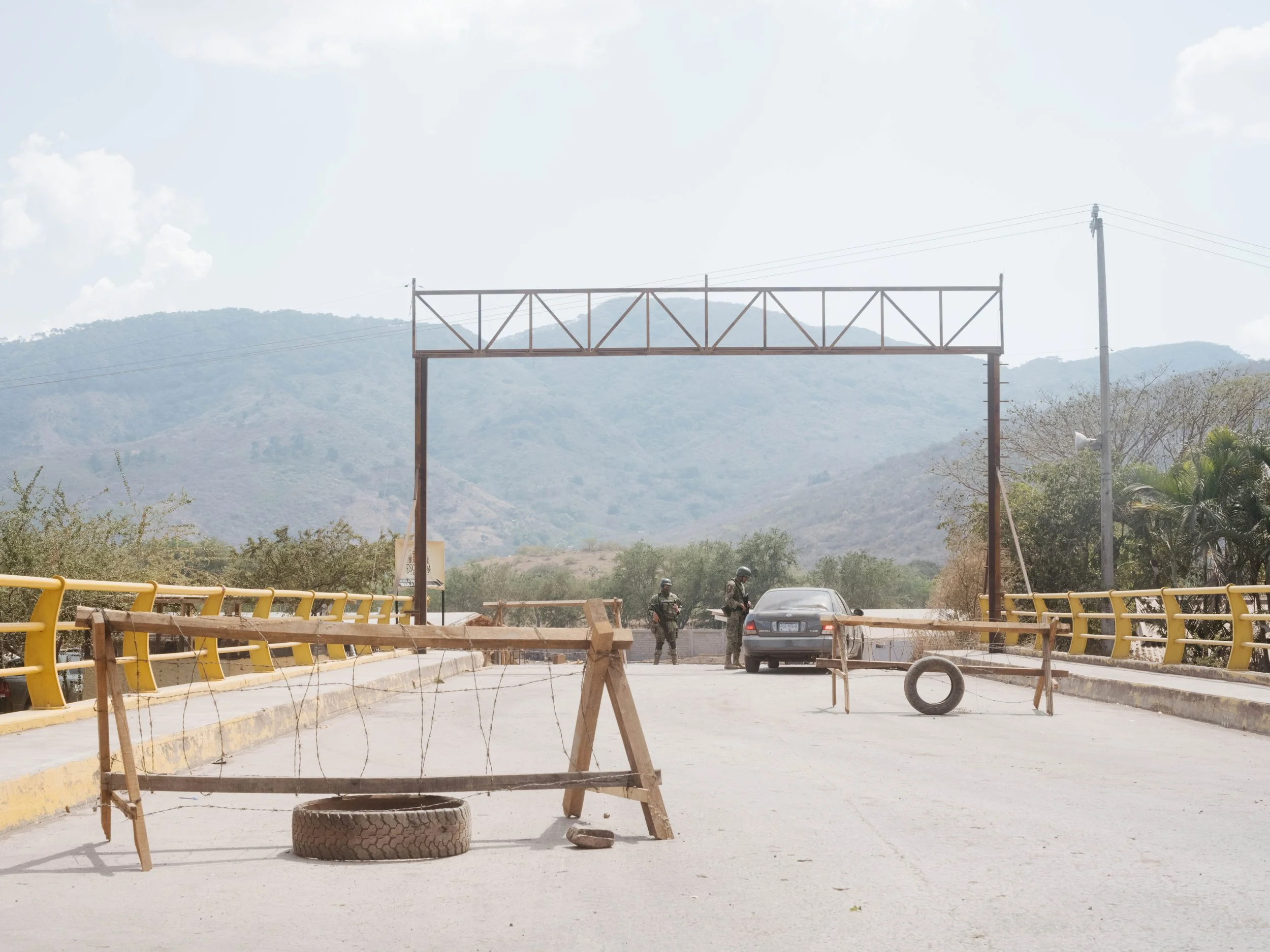
A military checkpoint blocks a bridge in Aguililla, Michoacán, days after the town was cut off following violent events in the region.
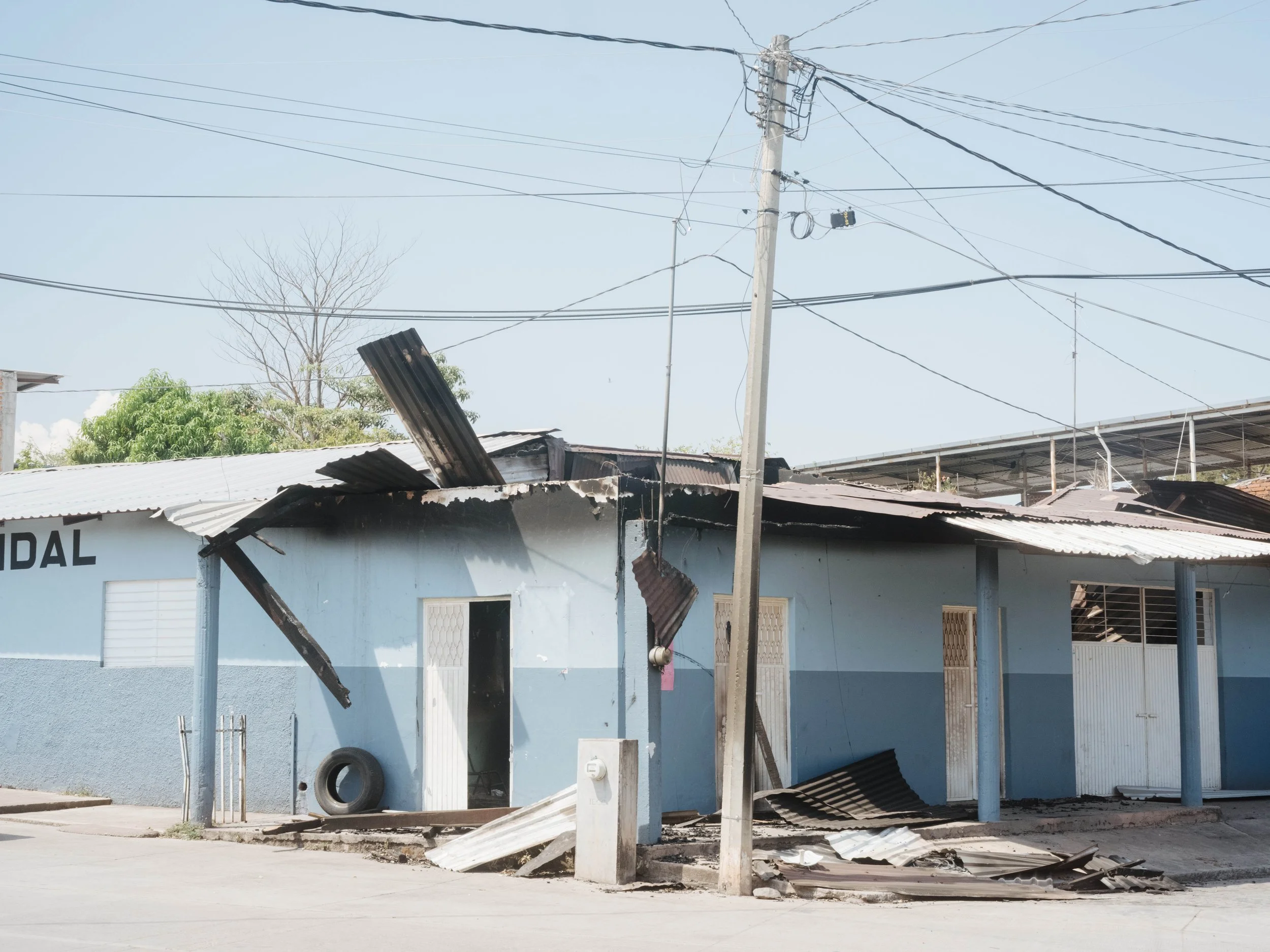
A burned storefront in Aguililla, Michoacán, during roadblocks linked to organized crime following the reported killing of Nemesio Oseguera Cervantes.
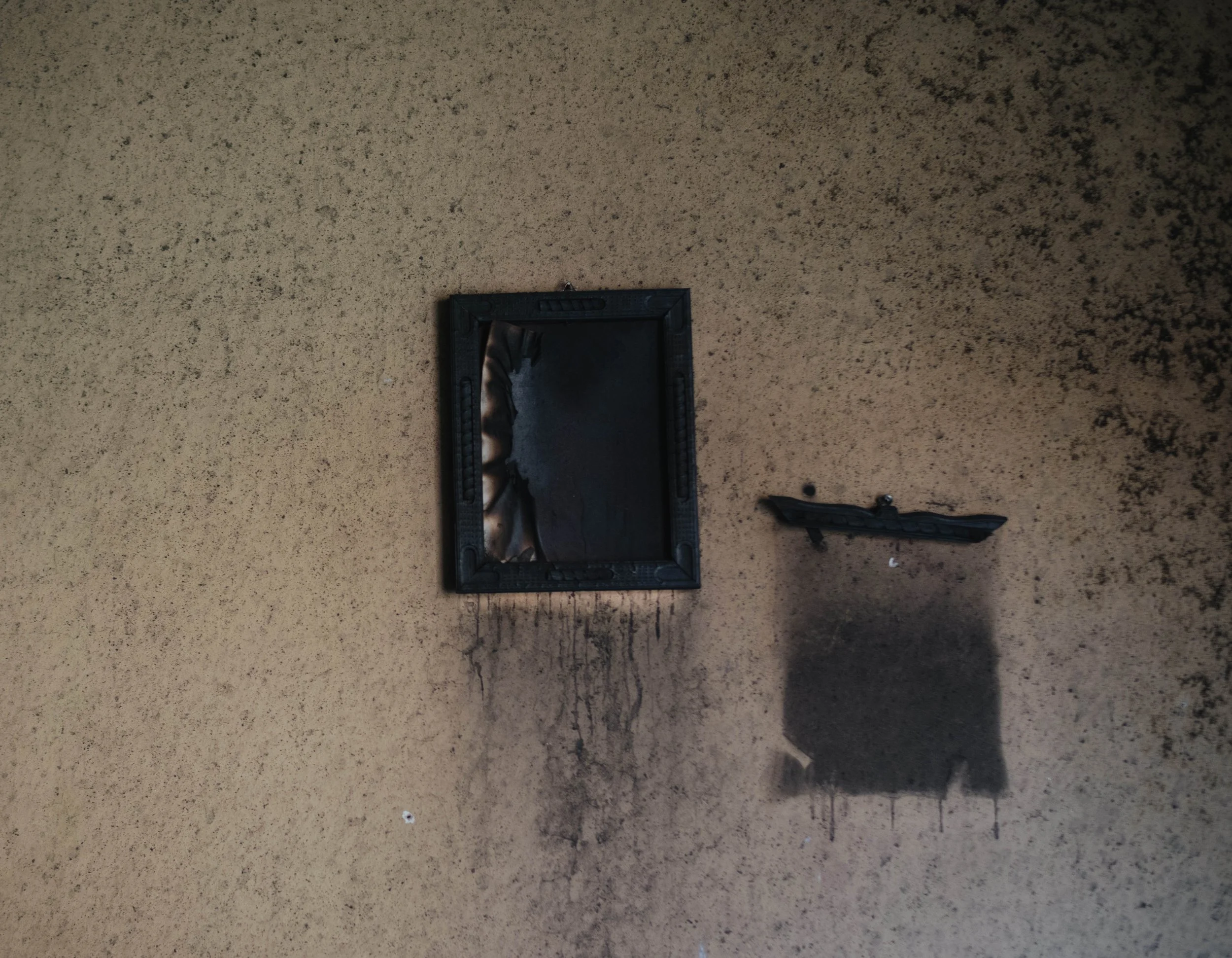
A charred picture frame hangs on a soot-stained wall inside a damaged space in Aguililla, Michoacán.
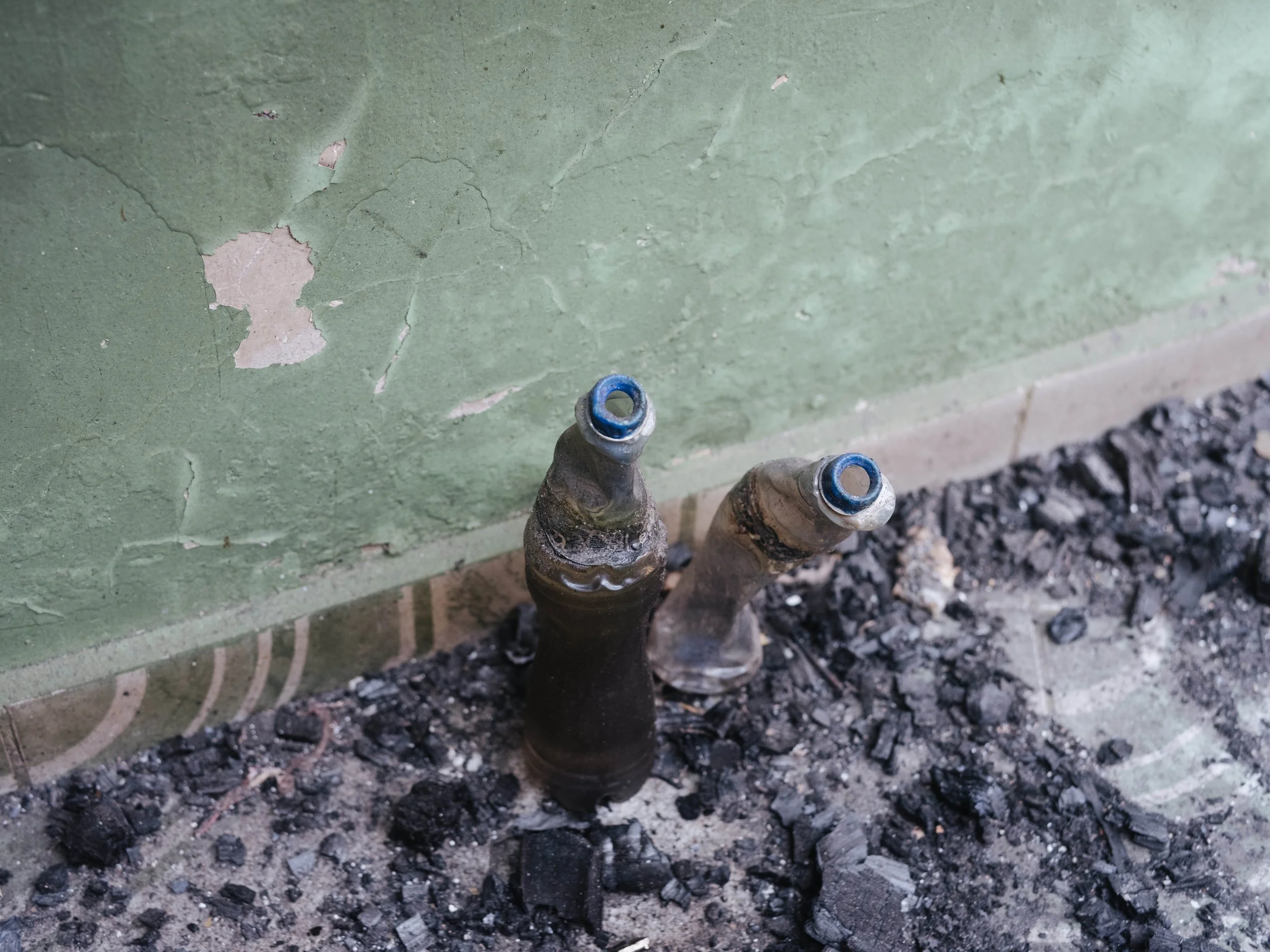
Burned glass bottles remain among debris inside a damaged space in Aguililla, Michoacán.
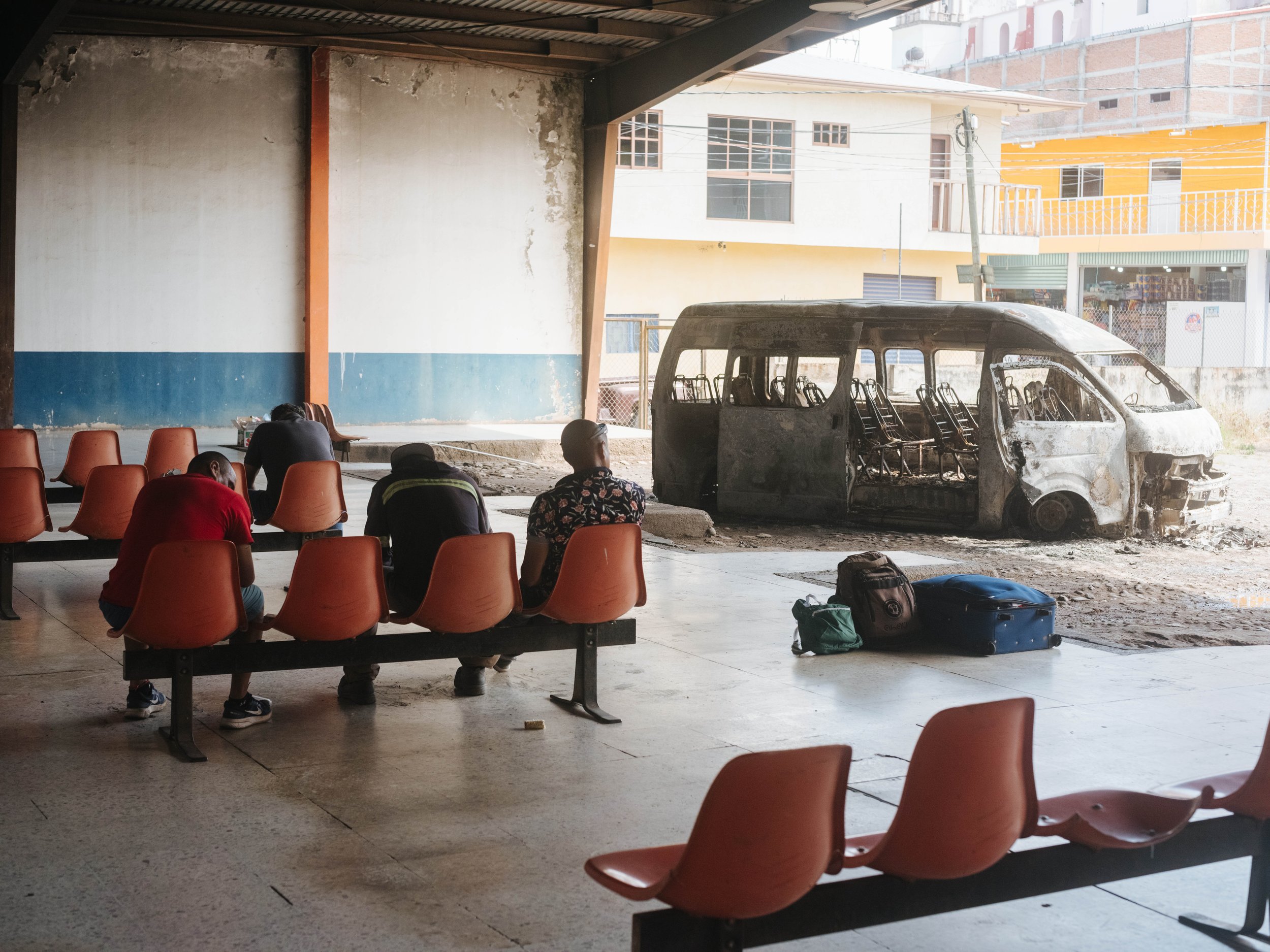
People wait inside a bus terminal in Aguililla, Michoacán, next to a burned vehicle, where daily life continues alongside the remnants of violence.
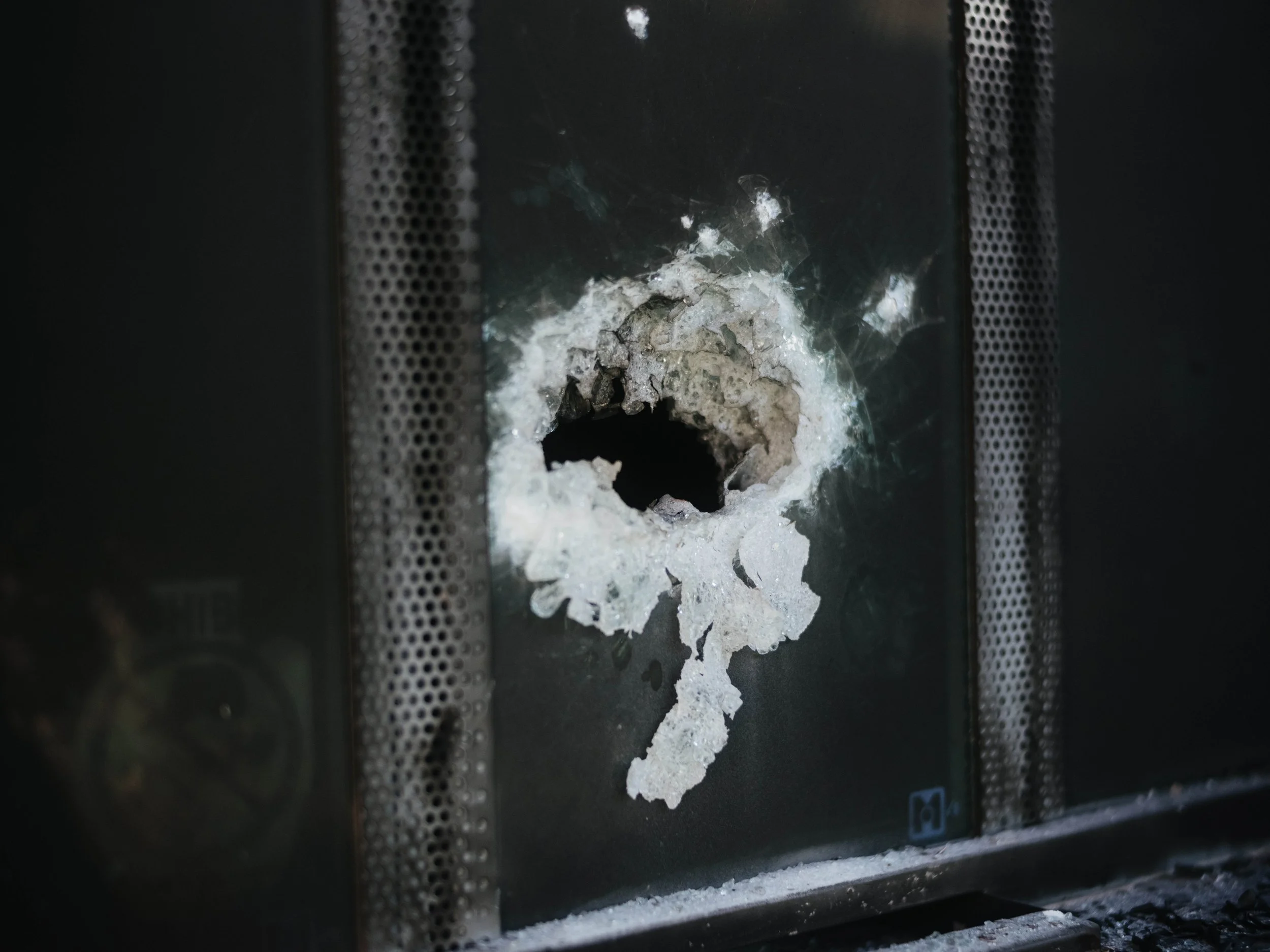
A large bullet hole is visible on a damaged surface inside a bank in Aguililla, Michoacán.
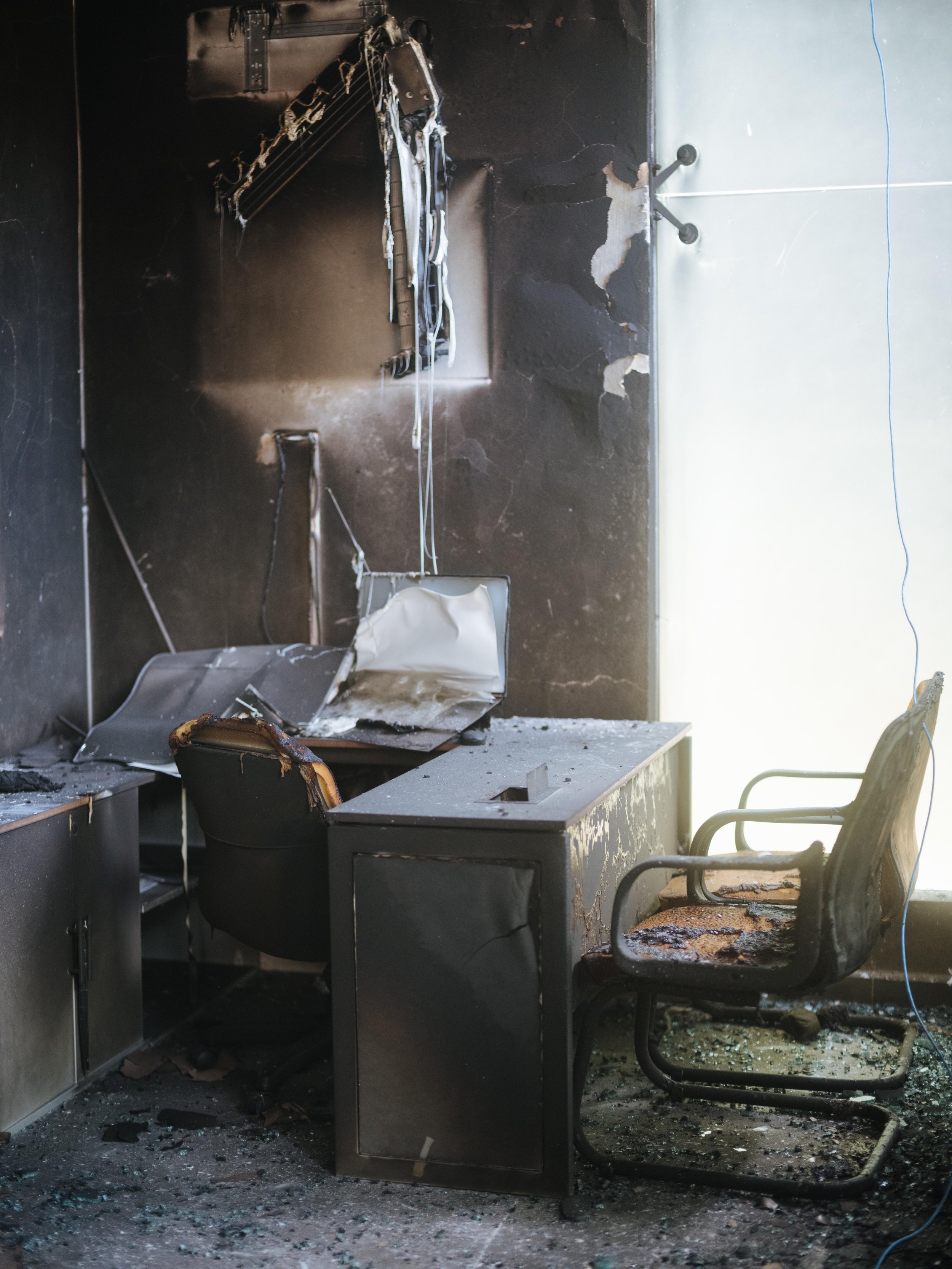
A burned office inside a bank in Aguililla, Michoacán, following violence in the region linked to CJNG.
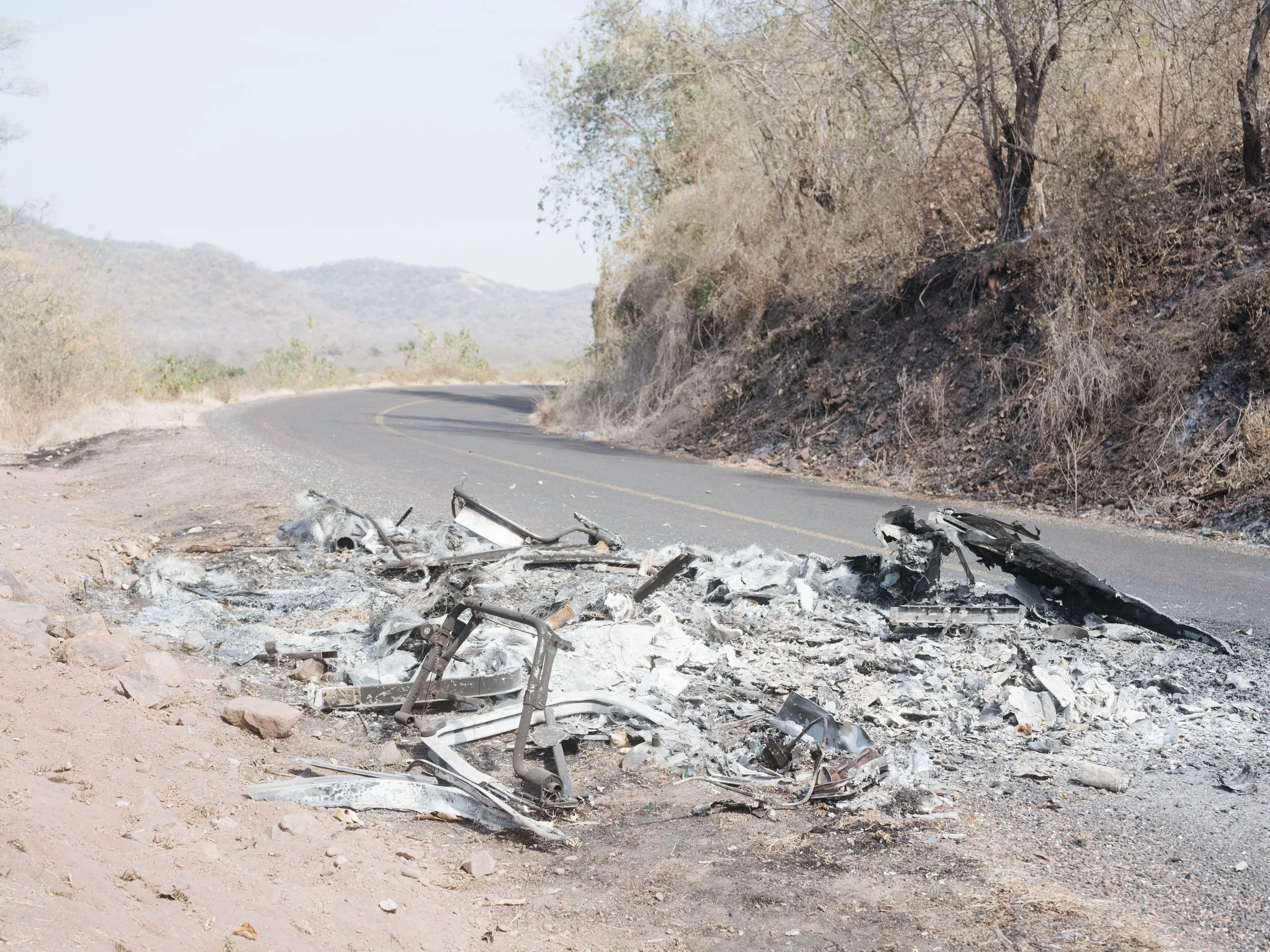
The remains of a burned vehicle lie along a road near Naranjo de Chila, Michoacán, in the municipality of Aguililla, where Nemesio Oseguera Cervantes was born.
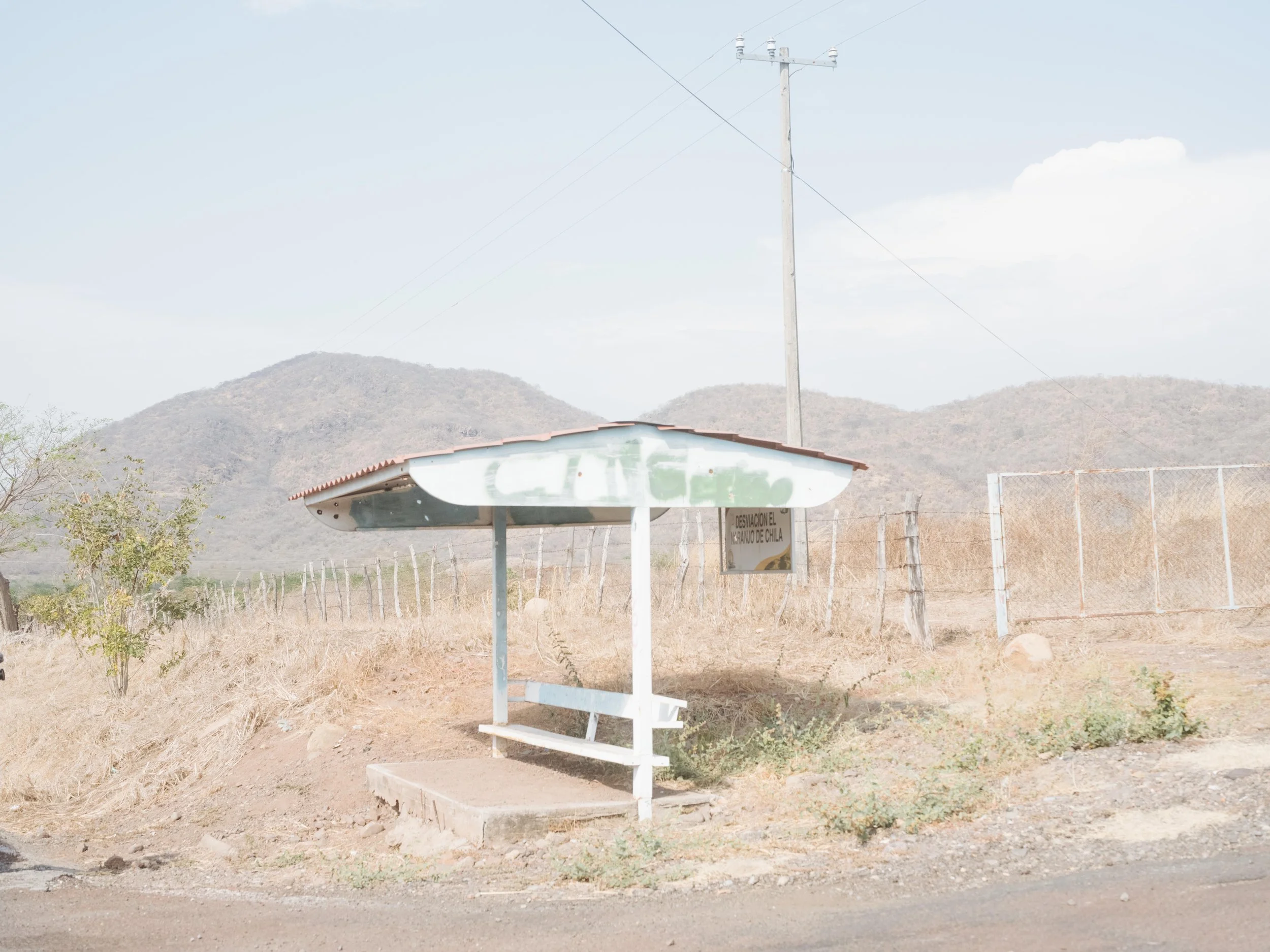
A bus stop near Naranjo de Chila, in the municipality of Aguililla, Michoacán, bears the faded initials “CJNG,” a reference to the Jalisco New Generation Cartel, in a region shaped by years of violence and territorial control.
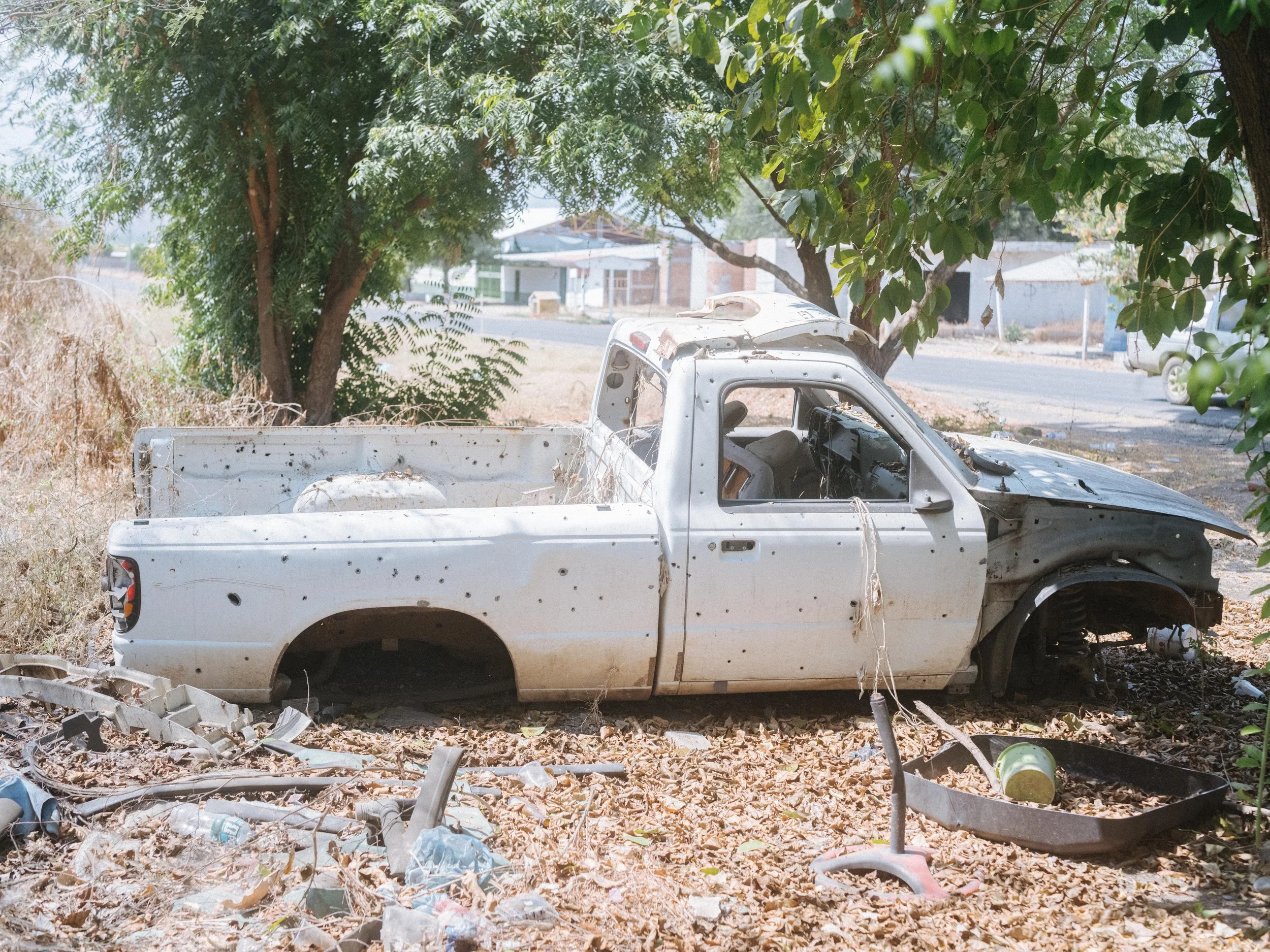
An abandoned pickup truck riddled with bullet holes sits along a road near Aguililla, Michoacán, an area marked by years of cartel violence and armed confrontations.
Pitch — Where Violence Lingers: Landscapes of Mines, Lemon Groves, and Graffiti
This series starts from a simple idea: violence works like a form of pollution.
The first time I went to Tierra Caliente, five years ago, armed clashes were constant. People were demanding peace. Rival cartels were fighting over territory and towns were left desolate.
What I found when I returned was different.
There is now an apparent calm, but it feels tense and desolate, as if the place doesn’t fully feel real.
There is an alliance between groups, but the territory did not recover.
Bullet marks are still there, covered with filler and paint that barely hides the cartels’ initials. Houses remain abandoned, just patched up. There is military presence, but also caution and distrust toward anyone coming in or out.
In some areas, the land is still dangerous. Mines were left behind. People have been injured trying to return to their own fields.
After the death of Nemesio Oseguera Cervantes, leader of the Jalisco New Generation Cartel, there were roadblocks and violence across different regions. In the town where he was born, cars were burned and roads were shut down. For days, no one could leave.
Unlike other parts of the country, here violence stays.
And over time, it changes everything.
Rosi, a gas vendor in Aguililla, puts it this way:
it’s never calm here. Living in tension is normal. Some days you can’t tell what’s normal anymore.
It got into the houses, into the ground, into the way people live.
It displaces, leaves spaces unused, and reshapes the territory.
The story is not only in what happened.
It is also in the territory.
Between lemon groves and blooming primavera trees, these towns remain in desolation.
This series examines violence not as an isolated event but as a persistent condition that permeates territory, social relations, and everyday life, unfolding in the period leading up to the World Cup. Drawing from repeated visits to Tierra Caliente, it proposes violence as a form of contamination—one that lingers materially in landscapes marked by bullet scars, abandoned homes, and residual threats such as landmines, while also reshaping patterns of habitation, mobility, and trust. Even amid the anticipation and national visibility associated with the upcoming tournament, the region remains structured by tension and uncertainty, revealing how prolonged exposure to violence reconfigures both physical space and collective perception. Through testimonies and visual traces, the work shifts the focus from spectacular episodes of conflict to their enduring aftermath, emphasizing how violence embeds itself into the environment and becomes normalized within daily experience.